
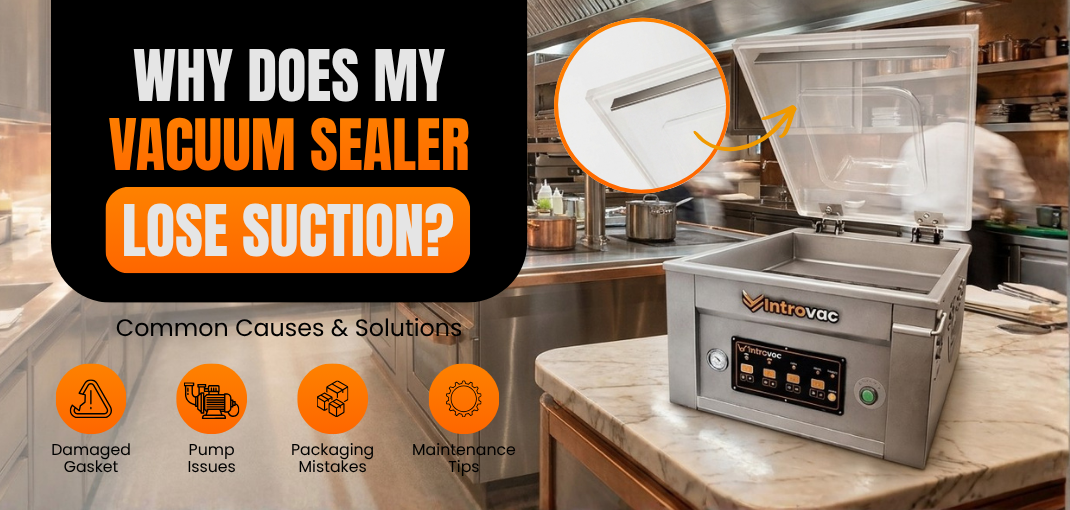
A vacuum sealer is designed to remove air from packaging and create a secure seal that helps protect products during storage, transportation, and handling. Whether you use a vacuum sealer at home, operate a restaurant, manage a food processing facility, or package products for commercial distribution, consistent vacuum performance is essential. When a vacuum sealer starts losing suction, takes longer than usual to remove air, or fails to achieve the expected vacuum level, it can affect packaging quality and interrupt daily operations.
A vacuum sealer losing suction does not always indicate a damaged vacuum pump. In many cases, the problem comes from something relatively simple, such as a damaged chamber gasket, a blocked vacuum port, an improperly positioned bag, or a sealing problem that allows air to enter the package. Other situations may involve low vacuum pump oil, worn components, loose connections, or a pump that requires professional inspection.
Understanding the actual cause is important because replacing parts without identifying the problem can lead to unnecessary expenses and recurring performance issues. A machine that is not producing the expected vacuum should be inspected systematically, starting with the packaging material and chamber condition before moving toward the vacuum system itself.
In this guide, we will explain the most common reasons a vacuum sealer loses suction, how to identify each problem, and what you can do to restore consistent vacuum performance.
How Does a Vacuum Sealer Create Suction?
Before troubleshooting a vacuum sealer, it helps to understand how the machine removes air from packaging.
A chamber vacuum sealer works by placing a filled vacuum bag inside an enclosed chamber. When the machine starts its cycle, the vacuum pump removes air from the entire chamber, reducing the pressure around the bag. Because the pressure inside and outside the bag remains nearly equal during the vacuum stage, the bag does not immediately collapse around the product.
Once the programmed vacuum level is reached, the sealing bar applies heat and pressure to the open end of the bag, creating an airtight seal. The chamber then returns to atmospheric pressure, causing the bag to tighten around the product.
External suction vacuum sealers operate differently. They remove air directly through an opening in a specially designed bag. As air is extracted, the bag collapses around the product, and the machine seals the opening.
This difference matters when diagnosing suction problems. A chamber vacuum sealer may experience issues with its chamber gasket, vacuum pump, vacuum connections, or operating settings. An external suction machine may have problems with its bag channels, air intake, sealing strip, or bag positioning.
Understanding which type of vacuum sealer you are using will help you identify the appropriate troubleshooting steps.
12 Common Reasons Your Vacuum Sealer Is Losing Suction
Several mechanical, operational, and packaging-related issues can affect vacuum performance. The following are some of the most common causes and the practical steps you can take to address them.
1. Damaged or Worn Chamber Gasket
One of the most common reasons a chamber vacuum sealer fails to achieve the expected vacuum level is a damaged or improperly seated chamber gasket.
The gasket creates an airtight connection between the chamber lid and the machine body. During operation, it prevents outside air from entering the chamber. If the gasket becomes worn, cracked, flattened, or displaced, air can enter while the vacuum pump is running.
This makes it difficult for the machine to reach its programmed vacuum level. You may notice that the vacuum cycle takes longer than usual, stops before reaching the target, or repeatedly produces inconsistent results.
Gaskets naturally experience wear over time, particularly in commercial environments where machines operate throughout the day.
How to fix it:
Inspect the entire gasket for visible cracks, cuts, deformation, or areas that no longer sit properly in their groove. Clean the gasket and its surrounding surface to remove food particles, grease, and packaging residue. Make sure it is correctly positioned before running another cycle.
If the gasket has become permanently deformed or damaged, replacement may be necessary. Always use a compatible replacement gasket designed for your machine model.
2. Vacuum Pump Oil Is Low or Contaminated
Oil-lubricated vacuum pumps depend on clean oil to maintain proper operation. Vacuum pump oil lubricates internal components, helps create an effective seal inside the pump, and supports consistent vacuum performance.
When the oil level becomes too low, the oil becomes contaminated, or the incorrect oil is used, the pump may struggle to maintain its expected performance.
This problem is particularly relevant in commercial vacuum packaging operations where machines may run multiple cycles throughout the day.
Common warning signs include slower vacuum cycles, unusual pump noise, overheating, or reduced vacuum performance. Oil that appears cloudy or milky may indicate moisture contamination.
How to fix it:
Check the oil level through the pump’s designated sight glass, following the manufacturer’s instructions. If the oil is below the recommended level, top it up using the specified vacuum pump oil.
If the oil looks dirty, discolored, or contaminated, follow the manufacturer’s recommended oil-change procedure. Avoid mixing different oil types or using ordinary motor oil as a substitute.
Not every vacuum pump uses oil. Dry-running pumps have different maintenance requirements, so always identify your pump type before performing maintenance.
Regular oil inspection is an important part of commercial vacuum sealer maintenance and can help prevent avoidable pump-related problems.
3. Vacuum Bag Is Not Positioned Correctly
Sometimes the vacuum sealer itself is working properly, but the packaging material is preventing effective air removal.
In external suction machines, the open end of the bag must be positioned correctly in the vacuum channel. If the bag is folded, wrinkled, or incorrectly aligned, air may not flow through the extraction channel as intended.
A similar problem can occur in chamber vacuum sealers when the bag opening is not positioned correctly over the sealing bar or when the product interferes with the packaging process.
Improper bag positioning can result in incomplete vacuum removal, inconsistent seals, and packages that gradually lose their vacuum after processing.
How to fix it:
Make sure the bag opening is flat, clean, and free from wrinkles. Position it according to the machine’s instructions, keeping the product away from the sealing area.
For external vacuum sealers, check that the bag’s embossed channels are correctly aligned with the machine’s air extraction system.
For chamber vacuum sealers, ensure that the bag opening lies flat across the sealing area and is not obstructed by the product.
4. Dirty or Blocked Vacuum Intake Port
Vacuum pumps require an unobstructed airflow path to remove air efficiently. When the vacuum intake, extraction port, or associated passage becomes blocked, the machine may lose suction or take considerably longer to complete its cycle.
Food particles, liquid residue, grease, dust, and packaging debris can accumulate around the vacuum intake, especially when the machine is used for packaging raw meat, seafood, or moisture-rich products.
In some cases, the blockage may be located inside a hose, filter, or connection rather than at the visible intake opening.
How to fix it:
Turn off the machine and disconnect it from the power supply before inspecting accessible components. Clean the vacuum intake area according to the manufacturer’s instructions.
Check accessible filters and connections for visible obstructions. If the machine uses a removable filter, inspect and clean or replace it as recommended.
Avoid inserting sharp objects into vacuum ports or dismantling internal components without the appropriate technical knowledge.
If the obstruction is inside the vacuum plumbing or pump assembly, arrange a professional inspection.
5. Vacuum Sealing Bar Is Not Working Properly
A vacuum sealer performs two important functions: removing air and creating an airtight seal. These functions are closely connected, but they are not the same.
A machine may remove air successfully but fail to maintain the vacuum because the sealing bar does not create a proper seal.
If the heating element, sealing strip, or sealing surface is damaged, the machine may produce weak, incomplete, or uneven seals. Air can then enter the package after the cycle.
You may notice that bags initially appear vacuum-packed but gradually inflate or lose their tight appearance during storage.
How to fix it:
Inspect the sealing bar and surrounding surfaces for food residue, grease, damaged sealing tape, or visible wear.
Check whether the seal is continuous across the entire width of the bag. An uneven or incomplete seal may indicate a problem with the heating element, sealing pressure, or sealing time.
Follow the manufacturer’s recommended procedure for cleaning and inspecting the sealing system.
If the heating element or other electrical sealing components are damaged, have them inspected and replaced by a qualified technician.
6. Vacuum Hose or Connection Is Leaking
A damaged hose or loose connection can prevent a vacuum system from maintaining the required pressure.
Vacuum hoses connect different parts of the machine, allowing air to move from the chamber or extraction system toward the pump. If a hose develops a crack, becomes loose, or has a damaged connection, outside air may enter the system.
This can reduce vacuum efficiency and increase the time required to complete each packaging cycle.
The problem may become more noticeable as machines age or operate in demanding commercial environments.
How to fix it:
Inspect accessible vacuum hoses and connections for cracks, loose fittings, visible damage, or signs of deterioration.
Make sure connections are secure and that hoses are correctly positioned. Replace damaged hoses with compatible components.
If the leak appears to originate from internal plumbing, valves, or pump connections, seek professional service rather than attempting an unverified repair.
7. Incorrect Vacuum Time or Machine Settings
Not every vacuum performance issue is caused by a mechanical failure. Incorrect machine settings can also produce results that appear similar to suction problems.
For example, if the vacuum time is too short for the product, bag size, or packaging load, the machine may finish its cycle before sufficient air has been removed.
Different products also behave differently during vacuum packaging. Dense products, bulky items, liquids, and products with irregular shapes may require different operating settings.
Commercial chamber vacuum sealers often provide programmable controls that allow operators to adjust vacuum levels, sealing time, and other cycle parameters.
How to fix it:
Review the machine’s operating settings and compare them with the recommended settings in the manufacturer’s manual.
Check whether the vacuum time, target vacuum level, and sealing time are appropriate for the product and packaging material.
Avoid increasing vacuum time unnecessarily without understanding the machine’s operating limits. Excessive settings may affect delicate products, damage packaging, or cause unwanted product deformation.
For businesses handling different product categories, maintaining suitable packaging programs can improve consistency between production runs.
8. Excessive Liquid or Moisture Inside the Packaging
Liquids and moisture can create additional challenges during vacuum packaging.
When packaging fresh meat, fish, marinated products, or other moisture-rich foods, liquid may move toward the bag opening during the vacuum cycle. This can interfere with the sealing process or contaminate the sealing area.
Liquid contamination around the sealing area can prevent a reliable airtight seal, even if the vacuum pump is operating correctly.
Moisture may also enter parts of the vacuum system if the machine is not designed or configured to handle the application.
How to fix it:
For products with excessive surface moisture, allow them to drain or use appropriate preparation methods before packaging.
Keep the bag opening and sealing area clean and dry. Do not overfill bags, and leave sufficient space between the product and the opening.
Chamber vacuum sealers are generally more suitable than ordinary external suction machines for packaging liquids because they remove air from the chamber rather than pulling liquid directly through an external extraction channel.
However, proper product preparation, temperature control, bag selection, and machine settings remain important.
If you frequently package liquids, sauces, marinades, or moisture-rich foods, choosing suitable chamber vacuum packaging equipment can make a significant difference.
9. Worn or Damaged Vacuum Pump Components
If the basic components are in good condition but the machine still cannot achieve the required vacuum level, the pump itself may be responsible.
Vacuum pumps contain internal components that experience wear through regular operation. Depending on the pump design, these may include vanes, seals, bearings, valves, and other mechanical parts.
Over time, wear can reduce pumping efficiency and prevent the machine from achieving its normal vacuum performance.
Other symptoms may include unusual noise, excessive vibration, overheating, or longer operating cycles.
How to fix it:
Start by checking the maintenance history, pump oil condition where applicable, and any visible external connections.
If the pump continues to underperform after routine maintenance and accessible issues have been ruled out, arrange an inspection by a qualified service technician.
Internal pump repairs should be performed according to the manufacturer’s service procedures. Replacing internal components without identifying the actual failure can lead to additional damage.
10. Vacuum Chamber Lid Is Not Closing Properly
A chamber vacuum sealer relies on a properly closed lid to maintain an airtight environment during operation.
If the lid is misaligned, obstructed, damaged, or unable to compress the gasket correctly, the machine may struggle to create the required vacuum.
This problem can sometimes occur after cleaning, moving the equipment, or replacing a chamber gasket.
How to fix it:
Check that the chamber lid closes evenly and that nothing is preventing it from reaching its normal closed position.
Inspect the lid gasket and surrounding surfaces for debris or damage.
If the lid appears misaligned or its hinges and supporting components are damaged, arrange professional adjustment or repair.
Never attempt to force the lid closed or bypass a safety mechanism to complete a vacuum cycle.
11. Vacuum Pump Is Overheating
Excessive heat can affect vacuum pump performance and may cause protective systems to interrupt operation.
Overheating can result from several conditions, including insufficient ventilation, incorrect oil levels, contaminated oil, excessive operating cycles, or an underlying mechanical problem.
In commercial environments, machines that operate continuously without following recommended duty cycles may experience additional thermal stress.
A vacuum pump that becomes unusually hot may also produce inconsistent performance or trigger thermal protection.
How to fix it:
Stop operating the machine if the pump is overheating or showing signs of abnormal operation.
Allow it to cool according to the manufacturer’s instructions. Check that ventilation openings are unobstructed and that the machine has sufficient space for airflow.
For oil-lubricated pumps, inspect the oil level and condition once it is safe to do so.
If overheating continues after basic checks, arrange professional inspection. Do not repeatedly restart an overheating machine in an attempt to complete packaging cycles.
12. Incorrect or Poor-Quality Vacuum Packaging Bags
The packaging material is an important part of the vacuum sealing process. Using the wrong bag type, thickness, or construction can affect vacuum extraction and seal quality.
For example, external suction vacuum sealers commonly require textured or embossed bags that provide channels for air extraction. Smooth bags designed for chamber vacuum machines generally do not work properly in standard external suction machines.
Chamber vacuum sealers typically use smooth vacuum pouches designed for chamber packaging applications.
Poor-quality bags may also have inconsistent thickness, weak sealing layers, or manufacturing defects that allow air to enter after packaging.
How to fix it:
Confirm that your vacuum bags are compatible with the machine.
Use chamber-compatible smooth bags for chamber vacuum sealers and suitable embossed bags for external suction machines.
Check the bag material for punctures, weak seams, wrinkles, or visible manufacturing defects before use.
If packages repeatedly lose vacuum despite correct machine operation, test with a different batch of compatible packaging bags.
Choosing the correct packaging material is just as important as maintaining the vacuum sealer itself.
How to Identify Whether the Problem Is in the Pump or the Packaging Bag
One of the most useful troubleshooting steps is determining whether the vacuum pump is failing to remove air or whether the packaging is failing to maintain the vacuum.
These are two different problems and require different solutions.
Consider the following symptoms:
| Symptom | Possible cause |
|---|---|
| Machine takes unusually long to reach vacuum | Pump performance, air leak, or incorrect settings |
| Chamber does not reach the programmed vacuum level | Gasket, plumbing, pump, or sensor issue |
| Bag looks vacuum-packed but inflates later | Puncture, weak seal, or product-related gas formation |
| Uneven or incomplete sealing line | Dirty sealing area or sealing system issue |
| Pump makes unusual noise | Possible mechanical wear or maintenance issue |
| External suction machine cannot extract air | Incorrect bag type, blocked channel, or poor positioning |
| Vacuum performance changes between cycles | Intermittent leak, operating conditions, or pump issue |
For chamber vacuum machines, a qualified technician can also check the machine’s vacuum readings and inspect the vacuum system for leaks.
A vacuum gauge or diagnostic reading can help distinguish between a pump that is not generating sufficient vacuum and a system that is allowing air to enter.
Do not rely solely on how tightly a bag appears to fit around a product. The appearance of the package does not always confirm that the machine has achieved the correct vacuum level.
Step-by-Step: How to Troubleshoot a Vacuum Sealer Losing Suction
If your vacuum sealer suddenly starts losing suction, following a consistent inspection process can help identify the problem without unnecessary disassembly.
Step 1: Stop the machine and inspect the packaging.
Check the vacuum bag for punctures, damaged seams, wrinkles, and incorrect positioning. Make sure you are using packaging material designed for your machine.
Step 2: Clean the sealing area.
Remove food particles, grease, and moisture from the sealing bar and surrounding surfaces. Contamination can prevent an airtight seal.
Step 3: Inspect the chamber gasket.
Look for cracks, flattening, deformation, or incorrect positioning. Replace damaged gaskets with compatible parts.
Step 4: Check the vacuum intake and accessible connections.
Inspect accessible ports, hoses, and filters for blockages or loose connections.
Step 5: Review the machine settings.
Confirm that vacuum and sealing parameters are appropriate for the product and bag being used.
Step 6: Check the vacuum pump maintenance condition.
If the machine has an oil-lubricated pump, inspect its oil level and condition according to the manufacturer’s instructions. Do not apply oil-pump procedures to dry-running pumps.
Step 7: Run a controlled test cycle.
Use an empty, compatible vacuum bag or another manufacturer-approved test method. Observe whether the machine completes its cycle normally.
Step 8: Contact a qualified technician if the problem continues.
If the machine still cannot achieve the required vacuum, the issue may involve internal plumbing, valves, pump components, sensors, or electrical controls.
Avoid dismantling electrical or mechanical components without proper training.
How to Prevent Vacuum Sealer Suction Problems
Preventive maintenance is generally less expensive than dealing with unexpected machine downtime. A consistent maintenance routine also helps businesses maintain packaging quality across multiple production cycles.
Here are several practices that can help reduce vacuum performance problems.
Clean the Machine Regularly
Food particles, grease, moisture, and packaging residue can accumulate around the chamber, sealing bar, and vacuum intake.
Clean these areas according to the manufacturer’s instructions after use, paying particular attention to the surfaces responsible for maintaining an airtight seal.
For food businesses, regular cleaning is also important for maintaining appropriate hygiene standards.
Inspect the Chamber Gasket
The chamber gasket should be inspected regularly, particularly when the machine operates frequently.
Look for cracks, deformation, loose sections, or contamination. Replacing a worn gasket before it completely fails can help prevent unexpected packaging problems.
Follow the Recommended Pump Maintenance Schedule
Oil-lubricated vacuum pumps require periodic oil inspection and replacement.
The correct maintenance interval depends on the pump, operating conditions, packaging applications, and manufacturer’s recommendations.
Businesses packaging moisture-rich products or operating machines for extended periods should pay particular attention to pump maintenance.
Use Compatible Vacuum Bags
Always select vacuum bags designed for your machine and application.
Incorrect bag materials can affect airflow, sealing quality, and packaging reliability.
Using suitable packaging material also helps reduce failures caused by weak seals or punctures.
Avoid Overloading the Chamber
Overloading a chamber vacuum sealer can interfere with bag positioning and sealing operations.
Keep products within the recommended chamber capacity and leave enough space for the packaging material to sit correctly across the sealing bar.
Train Machine Operators
Incorrect operating procedures can create recurring packaging problems.
Employees should understand how to position bags, select suitable settings, clean the sealing area, and recognize early signs of equipment problems.
Standard operating procedures can help maintain consistent results, particularly in commercial food processing facilities.
When Should You Repair or Replace Your Vacuum Sealer?
Not every suction problem requires a new machine. In many situations, replacing a gasket, cleaning a blocked port, changing pump oil, or repairing a sealing component can restore normal operation.
However, repeated failures may indicate that the machine requires more extensive service.
Consider repair when the problem is isolated to a replaceable component, the vacuum pump remains in good condition, and the machine otherwise meets your packaging requirements.
Replacement may become a more practical option when the pump has extensive internal wear, critical components are no longer available, repair costs are high, or the machine cannot handle your current production requirements.
For commercial businesses, the decision should also consider the cost of downtime, maintenance frequency, packaging consistency, and future production needs.
An older machine that requires repeated repairs may cost more to operate over time than a suitable replacement.
Introvac focuses on practical vacuum packaging solutions designed for different packaging requirements. When evaluating a new machine, consider chamber dimensions, pump capacity, sealing bar configuration, operating controls, production volume, and the types of products you intend to package.
You can also explore why Introvac packaging vacuum machines offer more value for your money to understand the factors that contribute to long-term equipment value.
Why Choosing the Right Chamber Vacuum Sealer Matters
A vacuum sealer that consistently struggles with suction may not always be a maintenance problem. Sometimes, the equipment is simply not suited to the application.
For example, businesses packaging meat, seafood, sauces, marinades, and other moisture-rich products may benefit from a chamber vacuum sealer rather than a basic external suction machine.
Chamber vacuum sealers remove air from the entire chamber, making them suitable for a wider range of packaging applications. They can also work with smooth vacuum pouches, which are commonly used in commercial food packaging.
For restaurants, butcher shops, food manufacturers, and seafood processors, the right machine can improve packaging consistency and support more efficient production workflows.
Businesses interested in preparing food for sous vide applications should also understand the differences between chamber and external vacuum sealing. Our guide, Sous Vide at Home? Here’s Why You Need a Chamber Vacuum Sealer, Not a Regular One, explains why equipment selection matters for this application.
Similarly, seafood processors looking for suitable packaging equipment can explore our Fish Packing Machine & Seafood Packaging Machine Guide.
Selecting equipment according to the product, production volume, and packaging requirements can help avoid many problems associated with inconsistent vacuum performance.
Frequently Asked Questions About Vacuum Sealer Suction Problems
1. Why is my vacuum sealer running but not removing air?
If your vacuum sealer runs but does not remove air effectively, the problem may involve a blocked vacuum intake, damaged gasket, leaking hose, incorrect bag positioning, or a vacuum pump issue. For external suction machines, using incompatible bags can also prevent proper air extraction.
Start by inspecting the packaging material and accessible vacuum components before arranging professional service.
2. Why does my chamber vacuum sealer not reach full vacuum?
A chamber vacuum sealer may fail to reach its programmed vacuum level because of an air leak, worn chamber gasket, damaged vacuum hose, pump maintenance issue, or malfunctioning vacuum control system.
Incorrect vacuum settings can also affect the result. If basic inspections do not identify the cause, a qualified technician should check the pump and vacuum system.
3. Can low vacuum pump oil cause loss of suction?
Yes. Low or contaminated oil can affect the performance of an oil-lubricated vacuum pump. It may reduce pumping efficiency and prevent the machine from achieving its expected vacuum level.
Check the oil level and condition according to the manufacturer’s instructions and use only the recommended vacuum pump oil.
4. Why does my vacuum-sealed bag lose suction after a few hours?
A package that initially looks vacuum-packed but loses its vacuum later may have a small puncture, weak seal, damaged packaging material, or an opening that was not sealed completely.
Some food products can also release gases during storage, depending on their condition and storage environment.
Inspect the package seams and product condition to determine whether the issue is related to packaging integrity or the product itself.
5. How do I know if my vacuum pump is failing?
Common warning signs include unusually long vacuum cycles, reduced vacuum performance, abnormal noise, excessive vibration, and overheating.
However, these symptoms can also result from air leaks, blocked filters, or maintenance problems. A vacuum reading and professional pump inspection are more reliable ways to confirm a failing pump.
6. How often should I change vacuum pump oil?
There is no universal oil-change interval for every vacuum pump. The recommended schedule depends on the pump model, operating conditions, and manufacturer’s maintenance instructions.
Commercial machines that operate frequently may require closer oil monitoring than machines used occasionally.
7. Can I use regular plastic bags in a vacuum sealer?
No. Ordinary plastic bags are generally not designed for vacuum packaging and may not provide the correct airflow channels or heat-sealing properties.
Use compatible vacuum bags. External suction machines commonly require embossed bags, while chamber vacuum sealers generally use smooth vacuum pouches.
8. Why does my vacuum sealer seal bags but not remove air properly?
If the machine seals bags but does not remove enough air, the vacuum extraction system may have a blockage, leak, incorrect setting, or pump-related problem.
Check the bag positioning and vacuum intake first. If the machine is a chamber model, inspect the chamber gasket and accessible connections.
9. Is a chamber vacuum sealer better than an external vacuum sealer?
Neither machine is universally better. Chamber vacuum sealers are generally more suitable for commercial applications, larger packaging requirements, and products containing liquids or marinades.
External suction machines are often suitable for simpler packaging tasks and smaller-scale applications. The right choice depends on the products, packaging materials, and production requirements.
10. Can a vacuum sealer lose suction because of overheating?
Yes. Excessive heat can affect pump performance and may activate protective systems that interrupt operation.
Overheating may result from inadequate ventilation, insufficient pump oil, contaminated oil, excessive operating cycles, or mechanical wear. Stop the machine if it overheats and investigate the cause before returning it to service.
Final Thoughts
A vacuum sealer losing suction can affect packaging quality, increase material waste, and interrupt everyday operations. However, the problem does not automatically mean that the vacuum pump has failed.
Damaged chamber gaskets, blocked vacuum ports, incorrect packaging bags, contaminated sealing surfaces, low pump oil, leaking connections, and incorrect machine settings are all potential causes.
The most effective troubleshooting approach is to start with simple inspections and gradually move toward the vacuum system and mechanical components. Regular cleaning, suitable packaging materials, correct operating settings, and preventive maintenance can help keep a vacuum sealer performing consistently.
For businesses that depend on reliable packaging every day, choosing equipment that matches the application is equally important. A properly selected and maintained chamber vacuum sealer can support consistent packaging across food processing, restaurants, seafood operations, and other commercial applications.
Looking for reliable vacuum packaging equipment?
Explore Introvac’s range of vacuum packaging machines and discover solutions designed for different products, packaging requirements, and business applications.
Visit Introvac.com to explore our machines and learn more about smarter vacuum packaging solutions.