
Sous vide cooking has moved from professional kitchens to home kitchens faster than almost any other cooking method in the last few years. Search interest in “sous vide at home” has climbed steadily, home cooks are buying immersion circulators by the thousands, and food content creators can’t stop posting perfectly pink steaks and fall-apart short ribs cooked at precise temperatures for hours.
But here’s what almost nobody tells you before you buy your first sous vide setup: your vacuum sealer matters just as much as your immersion circulator.
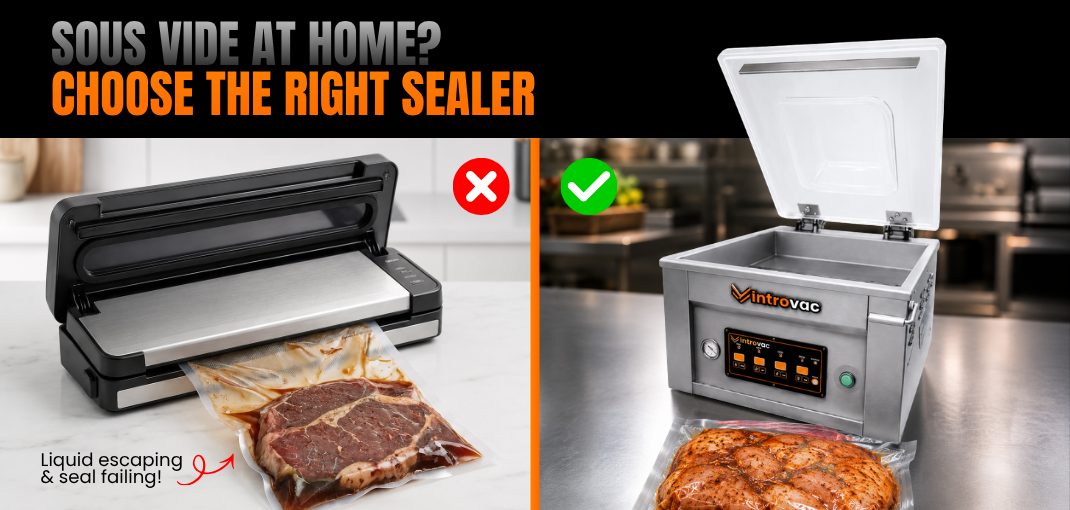
Most people already own, or go out and buy a regular external vacuum sealer, the kind that clamps the open end of a bag and sucks the air out from outside. It works fine for freezing chicken breasts or storing leftover rice. But the moment you try to seal a marinated steak, a bag of soup, or anything with liquid or moisture in it which is most sous vide food that same sealer starts failing you in ways that are frustrating, messy, and honestly a little embarrassing when you’re trying to impress dinner guests.
This article breaks down exactly why that happens, what a chamber vacuum sealer does differently, and how to decide which one actually makes sense for your kitchen.
What Is Sous Vide Cooking, and Why Does Bag Sealing Matter So Much?
Sous vide (French for “under vacuum”) is a cooking method where food is sealed in an airtight bag and cooked in a precisely temperature-controlled water bath for an extended period often one to several hours. The vacuum seal isn’t just packaging; it’s central to how the method works.
Here’s why the seal quality actually affects your food:
- Heat transfer, Water conducts heat far better than air. Any trapped air pocket in your bag creates an insulating layer that leads to uneven cooking.
- Food safety, A weak or partial seal can let water seep into the bag, diluting flavors, ruining texture, and in worst cases introducing bacteria into your cooking environment.
- Buoyancy, Bags with trapped air float. A floating bag means part of your food sits above the waterline, missing the precise temperature control that’s the entire point of sous vide.
- Flavor infusion, A true vacuum forces marinades, oils, and aromatics into direct contact with the food’s surface, which is a big part of why sous vide dishes taste so much richer than conventionally cooked ones.
In short: if your seal isn’t reliable, your sous vide results won’t be either no matter how good your immersion circulator is.
The Problem With Regular (External) Vacuum Sealers for Sous Vide
Most home vacuum sealers on the market are external, edge-sealing sealers. You’ve probably seen this type: you place the open end of the bag between two clamps, close the lid, and the machine pulls air out through a small nozzle before sealing the edge.
This design works reasonably well for dry, solid foods like bread, vegetables, or plain cuts of meat. But sous vide cooking almost always involves one of the following:
- Marinades, brines, or sauces
- Butter, oil, or stock added directly to the bag
- Naturally juicy proteins like steak, salmon, or short ribs
- Soups, stews, or liquid-based dishes
The moment there’s liquid in the bag, external sealers run into a fundamental design flaw: the suction process pulls liquid out along with the air. This causes a chain of problems:
- Liquid gets sucked into the machine itself, which can damage the motor or sealing strip over time.
- The seal often fails, because moisture on the sealing edge prevents the heat strip from bonding the plastic properly resulting in a weak seal or a bag that reopens mid-cook.
- You lose your marinade, before it even gets to do its job, since a chunk of it ends up in the machine’s drip tray instead of around your food.
- Repeated attempts waste bags, and vacuum sealer bags aren’t cheap when you’re doing this every week.
Most people who’ve tried sous vide with a basic external sealer have a story about a bag bursting open in the water bath, or spending ten minutes fighting with a machine that keeps stalling because of moisture in the seal channel. It’s not a user error problem it’s a machine limitation.
What a Chamber Vacuum Sealer Does Differently
A chamber vacuum sealer works on a completely different principle. Instead of pulling air only from inside the bag through a narrow opening, the entire bag food, liquid, and all sits inside a sealed chamber. The machine then removes air from the whole chamber itself, equalizing the pressure everywhere at once, and only then seals the bag.
Here’s why that solves the exact problem above:
- No liquid loss, Since the pressure drops evenly across the whole chamber rather than being pulled through a nozzle, liquids stay in the bag instead of getting sucked out.
- Consistent, strong seals every time, The sealing bar activates only after full vacuum is reached inside the sealed chamber, so there’s no moisture interference at the seal line.
- Works with soups, marinades, and sauces, This is genuinely the main reason chamber sealers exist. You can seal a bag half-full of liquid without a single drop escaping.
- Better for repeated commercial-style use, Because there’s no exposed suction nozzle catching food debris or liquid, chamber sealers tend to need less cleaning and have a longer working life under frequent use.
If you’ve ever wondered why professional kitchens and serious home cooks who take sous vide seriously almost always use chamber sealers instead of the entry-level clamp-style machines, this is the reason. It’s not about brand preference it’s about a fundamentally different (and more reliable) sealing mechanism.
Single Chamber vs Double Chamber – Which One Do You Actually Need?
Once you’ve decided a chamber sealer is the right tool, the next question is which type fits your situation.
Single Chamber Vacuum Sealer A single chamber sealer has one sealing compartment. You load a bag, close the lid, run the cycle, and repeat. This is the right choice if you:
- Cook sous vide meals for yourself or your family, a few times a week
- Batch-prep meals for the week ahead (marinated proteins, pre-portioned meals)
- Want a machine that fits comfortably on a kitchen counter
- Don’t need to seal dozens of bags back-to-back in a single session
Double Chamber Vacuum Sealer A double chamber sealer has two independent sealing compartments, allowing you to load and seal two bags either simultaneously or in quick succession while the other chamber resets. This makes sense if you:
- Meal-prep in bulk for a large household
- Run a home-based food business, catering service, or meal-prep delivery service
- Need to process a higher volume of bags in a shorter amount of time
- Want built-in redundancy if one chamber needs maintenance, the other keeps working
For most home sous vide cooks getting started, a single chamber sealer is more than enough and is the more practical, budget-friendly entry point. If your sous vide habit turns into batch-cooking for the week, meal-prep subscriptions, or a side business, upgrading to a double chamber machine becomes worth the investment.
Table Top Vacuum Sealers: Do They Work for Sous Vide?
It’s worth addressing this directly, since “table top vacuum sealer” is one of the most searched terms in this category. Table top sealers are usually the external, edge-sealing type compact, affordable, and designed for general kitchen use like food storage and freezing.
They can technically be used for sous vide with dry or low-moisture foods a plain chicken breast with just a dry rub, for example. But as soon as marinades, oils, or naturally juicy cuts are involved, you’ll run into the same liquid-suction issues described above.
If you’re only ever going to sous vide dry-rubbed meats and vegetables, a good table top sealer can work in a pinch. But if you want to actually explore what sous vide is capable of marinated short ribs, butter-basted fish, soups and stocks a chamber sealer isn’t a luxury upgrade. It’s the tool that actually matches the job.
Real Cost Comparison: Chamber Sealer vs Constantly Replacing Bags
A common hesitation is price, chamber vacuum sealers typically cost more upfront than basic external sealers. But it’s worth running the actual math:
- Failed seals waste bags, If an external sealer fails to seal properly one out of every four or five attempts with liquid-heavy food, that’s a recurring cost every single week.
- Specialty bags for external sealers, designed to handle some moisture are often priced at a premium compared to standard chamber bags, which tend to be simpler and cheaper per unit because the machine not the bag is doing the harder work.
- Wasted ingredients, from failed seals (spilled marinade, lost liquid, a ruined batch) add up faster than most people expect.
- Time cost, re-sealing a bag two or three times before it finally holds isn’t just annoying, it’s time you’re not getting back.
When you factor in fewer failed attempts, less wasted food, and a machine built to handle liquids without extra workaround products, a chamber sealer often pays for itself faster than expected for anyone cooking sous vide regularly.
Signs You’ve Outgrown a Regular Vacuum Sealer
If any of the following sound familiar, it’s a strong signal that a chamber vacuum sealer is the upgrade you actually need:
- You’ve had a bag pop open or float during a sous vide cook
- You avoid marinating before vacuum sealing because you know it’ll cause problems
- You’ve lost sauce, stock, or marinade into the machine itself
- You’re going through vacuum bags faster than expected due to failed seals
- You cook sous vide more than once a week and want consistent, repeatable results
- You’re batch-cooking or meal-prepping and need reliable sealing at volume
Frequently Asked Questions
Can I use a regular vacuum sealer for sous vide? Yes, but only reliably for dry or low-moisture foods. Anything with marinade, sauce, or natural juices is likely to cause sealing failures with an external sealer.
Why does my vacuum sealer keep failing when I try to seal liquids? External sealers pull air (and liquid) through a narrow nozzle. Moisture reaching the sealing strip prevents a proper heat seal, which is why bags with liquid often fail or reopen.
Is a chamber vacuum sealer worth it for home use? If you cook sous vide regularly, batch-prep meals, or work with marinades and sauces, yes a chamber sealer removes the most common frustration home cooks face with sous vide bag sealing.
Single chamber or double chamber which should I start with? A single chamber sealer is ideal for most home cooks. A double chamber machine makes more sense for larger households, bulk meal prep, or small food businesses that need higher sealing volume.
Do chamber vacuum sealers need special bags? Chamber sealers typically use simpler, often more affordable embossed or smooth bags compared to the specialty bags marketed for external sealers, since the machine itself does more of the work.
The Bottom Line
Sous vide cooking rewards precision precise temperature, precise timing, and yes, a precise seal. A regular external vacuum sealer can get you started, but the moment marinades, sauces, or naturally juicy cuts enter the picture, its limitations become obvious fast.
A chamber vacuum sealer solves the exact problem home sous vide cooks run into most often: it seals liquids cleanly, consistently, and without the frustration of failed attempts or wasted ingredients. Whether a single chamber or double chamber machine makes sense depends on how much you’re cooking and how often but either way, it’s the tool that actually matches how sous vide cooking works, rather than working around its limitations.
If you’re serious about sous vide at home, the sealer you choose isn’t a small detail. It’s the difference between fighting your equipment and actually enjoying the process.