
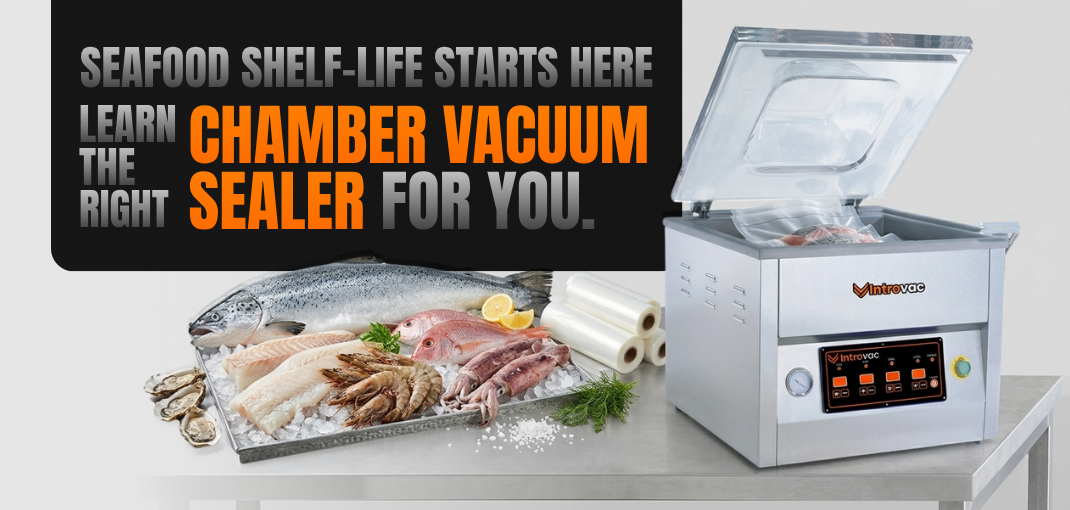
In the seafood industry, freshness isn’t just a quality factor it’s the entire business model.
Fish, shrimp, and other seafood products are highly perishable, and even a few hours of poor storage or air exposure can significantly reduce their value. That’s why modern seafood businesses are rapidly shifting from traditional packing methods to vacuum-based preservation systems especially the chamber vacuum sealer.
If you’re searching for a reliable seafood packaging machine, a high-performance fish packing machine, or a professional fish vacuum packing machine, the answer is simple: the most efficient, widely used, and industry-proven solution is a chamber vacuum sealer machine.
This guide explains why chamber vacuum sealers dominate seafood packaging, how they work, and how to choose the right fish packing machine or seafood packaging machine for commercial fish processing and export operations.
Why Seafood Packaging Needs Advanced Vacuum Technology
Seafood is one of the most sensitive food categories in the global supply chain.
Unlike dry or processed food, fish products start degrading immediately after harvest due to:
- Oxygen exposure
- Bacterial growth
- Moisture loss
- Temperature fluctuations
- Enzyme activity inside the meat
Without proper packaging, even high-quality fish loses texture, color, smell, weight, and market value. This is why commercial processors rely on a dedicated seafood packaging machine to preserve product integrity from processing plant to final customer.
Among all available technologies, chamber vacuum systems deliver the most consistent, industrial-grade results which is why they’ve become the standard fish packing machine format across the industry.
What Is a Chamber Vacuum Sealer?
A chamber vacuum sealer is an industrial packaging machine that removes air from both the chamber and the packaging bag simultaneously, creating a deep vacuum environment before sealing the product.
Unlike external sealers, where only the bag is vacuumed, chamber-style machines ensure:
- Uniform pressure
- Stronger vacuum level
- No air pockets
- Liquid-safe sealing
This makes chamber systems the preferred fish packing machine and seafood packaging machine choice for processing units worldwide.
Why Chamber Vacuum Sealers Are Perfect for Fish & Seafood
Not all vacuum systems perform equally. Many low-cost sealers fail when handling moisture-rich products like fish, which is exactly where a purpose-built fish packing machine earns its cost.
1. Handles Liquid-Rich Products Easily
Fish naturally contains moisture, blood, and juices. Chamber machines prevent liquid overflow, seal contamination, and weak sealing making them ideal for whole fish, fillets, shrimp, and marinated seafood.
2. Deep and Consistent Vacuum Quality
A reliable seafood packaging machine delivers uniform air removal, tight packaging, longer shelf life, and reduced oxidation directly improving seafood quality during storage and export.
3. Export-Grade Packaging Standard
International seafood markets demand strict packaging quality. A chamber-style fish packing machine helps meet HACCP requirements, export hygiene standards, and cold chain logistics needs.
4. Prevents Freezer Burn
Freezer burn is one of the biggest losses in frozen seafood businesses. Chamber vacuum sealing eliminates air exposure, preventing ice crystal formation, surface dehydration, and texture damage so seafood stays fresh even after long freezing cycles.
How a Fish Packing Machine Works (Simple Explanation)
- Product is placed inside a vacuum bag
- Bag is placed inside the chamber
- Chamber lid closes
- Air is removed from the entire chamber
- Internal and external pressure equalizes
- Bag is sealed tightly
- Air returns, and packaging is complete
This process ensures a perfect seal even for wet seafood products.
Types of Fish Packing Machines & Seafood Packaging Machines
Not all chamber machines are the same. Depending on production scale, businesses choose different models.
1. Table-Top Chamber Vacuum Sealers
Best for small seafood shops, local fish suppliers, and startup processing units. Compact design, easy operation, lower capacity.
2. Single Chamber Vacuum Sealers
Best for medium seafood processing plants, restaurants, and wholesalers running daily production. Higher vacuum strength, stainless steel construction, continuous-use capability.
3. Double Chamber Vacuum Machines
Best for large seafood factories and export companies running high-volume lines. Two-chamber system for continuous workflow, high-speed packaging, industrial durability.
Key Features to Look for in a Fish Packing Machine
If you’re investing in a chamber vacuum sealer for seafood packaging, these features are essential:
- Industrial vacuum pump – deep air removal, long-term sealing quality
- Stainless steel (SS304) construction– hygiene-grade, corrosion-resistant
- Wide seal bars – prevent leakage during freezing and transport
- Moisture handling capability – essential for fish, shrimp, and marinated seafood
- Easy-clean design – hygiene is critical in seafood processing environments
- Heavy-duty performance – continuous production without overheating or downtime
Common Mistakes When Buying a Seafood Packaging Machine
- Buying external sealers for liquid seafood
- Ignoring production capacity needs
- Choosing non-industrial pumps
- Overlooking maintenance requirements
- Selecting low-grade sealing materials
A wrong choice in a fish packing machine can lead to product loss and packaging failure the upfront savings rarely cover the downstream waste.
Benefits of Using a Chamber Vacuum Sealer for Seafood
- Longer shelf life – slows bacterial growth and oxidation
- Better product appearance – maintains natural color and texture
- Reduced waste – less spoilage, higher profit margins
- Export readiness – meets global packaging standards
- Operational efficiency – faster, more consistent packaging
Why Introvac Chamber Vacuum Sealers Stand Out
At Introvac, we specialize in industrial-grade chamber vacuum sealing machines designed for the meat and seafood industries, built for:
- High-performance seafood packaging
- Continuous production environments
- Export-grade vacuum sealing
- Heavy-duty industrial use
- Hygienic stainless steel construction
Whether you need a compact fish packing machine or a full-scale commercial seafood packaging machine, explore Introvac’s chamber vacuum sealer range for solutions built for real industrial demand.
Who Should Use a Fish Packing Machine or Seafood Packaging Machine?
- Seafood processing factories
- Fish exporters
- Cold storage facilities
- Supermarkets and retail chains
- Meat and seafood wholesalers
- Food manufacturing companies
If your business handles fresh or frozen seafood, a chamber-style seafood packaging machine isn’t optional, it’s essential.
The Future of Seafood Packaging Is Vacuum Technology
The seafood industry is moving toward automation and precision packaging. Expect to see smart vacuum monitoring systems, automated chamber sealing lines, energy-efficient vacuum pumps, sustainable packaging materials, and export-standard packaging automation. Businesses adopting a proper fish packing machine today are securing a stronger position in tomorrow’s market.
FAQs
What’s the difference between a fish packing machine and a fish vacuum sealer?
In practice they refer to the same equipment category industrial machines that remove air and seal fish or seafood in vacuum bags. “Fish packing machine” is the broader commercial term; “vacuum sealer” describes the mechanism.
What size chamber vacuum sealer does a small seafood business need?
A table-top chamber vacuum sealer is usually sufficient for small shops and local suppliers. Processing plants and exporters generally need single- or double-chamber industrial models.
Can a chamber vacuum sealer handle liquid-heavy products like fresh fish or shrimp?
Yes, this is precisely what distinguishes chamber vacuum sealers from external sealers. Because the whole chamber is vacuumed rather than just the bag, liquids don’t get pulled into the seal area, so wet seafood seals cleanly.
Final Thoughts
Choosing the right fish packing machine or seafood packaging machine isn’t just about equipment it’s about protecting product value. For seafood businesses, the most reliable, efficient, and industry-proven solution remains the chamber vacuum sealer: strong vacuum performance, better product preservation, export-ready packaging quality, lower operational waste, and higher profitability.
At Introvac, we help seafood processors achieve professional packaging standards with durable, high-performance chamber vacuum systems built for real industrial use.