
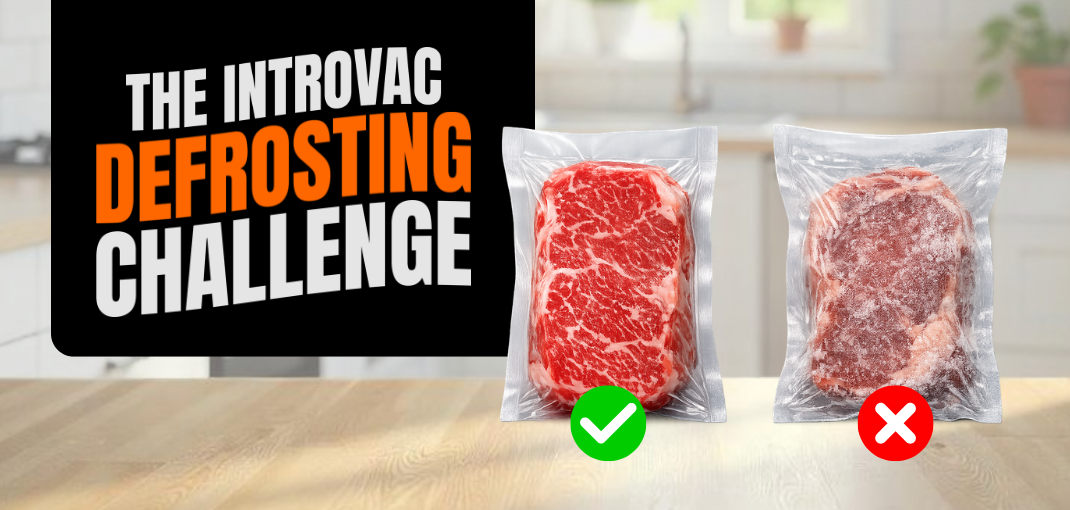
If you’ve ever pulled a rock-solid steak out of the freezer an hour before dinner, you already know the real question isn’t whether to defrost meat it’s how to do it without ruining it or making anyone sick.
Freezing is one of the easiest ways to cut food waste and stretch your grocery budget. But the moment meat leaves the freezer, the clock starts ticking. How you thaw meat matters just as much as how you freeze it, it affects texture, flavor, and most importantly, food safety.
When meat is vacuum sealed with a chamber vacuum sealer like an Introvac Chamber Vacuum Sealer, it holds up better in the freezer by resisting freezer burn, oxidation, and moisture loss. But even the best-sealed package can lose quality or become unsafe if it’s thawed the wrong way.
This guide breaks down the safest, fastest, and most flavor-preserving ways to defrost meat, according to USDA food safety guidelines.
Why Proper Defrosting Matters
A common misconception: freezing kills bacteria.
It doesn’t. Freezing only pauses bacterial activity it doesn’t eliminate it. The moment meat starts to warm up, any bacteria present become active again.
The USDA defines 40°F–140°F (4°C–60°C) as the “Danger Zone” the temperature range where bacteria multiply fastest. The goal of safe thawing is simple:
- Keep meat out of the Danger Zone as much as possible
- Thaw it evenly, not just on the surface
- Preserve moisture and texture
- Cook it promptly once thawed
Vacuum-sealed packaging helps on all four fronts the airtight seal blocks outside contamination and prevents moisture loss throughout the thaw.
Method 1: Thawing Meat in the Refrigerator (Safest Method)
The refrigerator is the gold standard for thawing meat safely. It’s slower than other methods, but it keeps meat consistently below the Danger Zone the entire time.
How to do it: Move the frozen, vacuum-sealed package from the freezer to the fridge and place it on a plate or shallow tray to catch condensation as it thaws.
How Long Does It Take to Thaw Meat in the Fridge?
| Meat | Approximate Thaw Time |
|---|---|
| Chicken breasts | 12–24 hours |
| Ground beef | 12–24 hours |
| Steaks | 18–24 hours |
| Pork chops | 18–24 hours |
| Whole chicken | 24–48 hours |
| Large roast | 2–4 days |
| Turkey | Several days, depending on size |
Why it’s the best option:
- Lowest bacterial risk of any method
- Best texture and moisture retention
- Thaws evenly, inside and out
- Gives you flexibility if plans change, refrigerator-thawed meat can typically stay refrigerated another day, or even be refrozen, before cooking (though quality may dip slightly with repeated freeze-thaw cycles)
Method 2: Cold Water Thawing (Fastest Safe Method)
Need meat thawed in under an hour? Cold water thawing is the fastest method that’s still considered safe by the USDA.
How to do it: Keep the meat fully sealed in its vacuum bag and submerge it in a bowl or sink of cold water. Change the water every 30 minutes to keep the temperature consistently cold.
How Long Does Cold Water Thawing Take?
- Individual cuts: 30–60 minutes
- Larger packages: 1–3 hours
Because the vacuum-sealed bag is airtight, the meat itself never touches the water you get faster thawing without sacrificing freshness.
Never use warm or hot water. It heats the exterior of the meat into the Danger Zone before the interior even thaws, creating a bacterial growth risk.
Method 3: Microwave Defrosting (Fastest, but Riskiest)
Most microwaves have a defrost setting built for exactly this. It’s fast but it comes with tradeoffs:
- Thawing is uneven; some spots may start cooking while others are still frozen
- Texture often suffers
- Meat must be cooked immediately after no exceptions
Use this method only when you’re going straight from microwave to stovetop or oven.
Can You Cook Meat Without Thawing It First?
Yes. Many smaller cuts can go directly from freezer to:
- Oven
- Pressure cooker
- Air fryer
- Stovetop
Just know that cooking from frozen typically takes about 50% longer than cooking thawed meat. Always confirm the internal temperature hits the USDA-recommended safe minimum before serving a meat thermometer is non-negotiable here.
Mistakes to Avoid When Defrosting Meat
Don’t Thaw Meat on the Counter
It feels harmless, but it’s one of the most common food safety mistakes. The outside of the meat warms far faster than the center meaning the surface can sit in the Danger Zone for hours while the middle is still frozen solid.
Avoid thawing meat:
- On the kitchen counter
- In direct sunlight
- Near a stove or other heat source
- In a garage or warm room
Don’t Use a Slow Cooker to Thaw Frozen Meat
Slow cookers are built to cook food, not thaw it. Starting from frozen means the meat spends too long heating gradually exactly the conditions bacteria thrive in. This is especially risky for large items like:
- Roasts
- Whole chickens
- Pork shoulders
- Beef briskets
Thaw first, then transfer to the slow cooker.
What If You Thawed More Meat Than You Need?
If it was thawed safely in the refrigerator (not left out at room temperature), you can generally refreeze it before cooking. Repeated freeze-thaw cycles can slightly affect moisture and tenderness, though which is why portioning matters.
The fix: vacuum seal meat into meal-sized portions before freezing individual steaks, single chicken breasts, ground beef portions, or full meal-prep packs. That way you’re only ever thawing exactly what you need.
Tips for Freezing Meat So It Thaws Better Later
- Divide bulk purchases into meal-sized portions before freezing
- Remove as much air as possible with a chamber vacuum sealer
- Label every package with the freeze date
- Freeze packages flat for faster, more even thawing
- Rotate older packages to the front so nothing gets forgotten
Why Vacuum-Sealed Meat Thaws Better
Vacuum sealing isn’t just about freezer life, it changes how meat thaws, too. With little to no trapped air, vacuum-sealed meat tends to thaw more evenly than meat wrapped in freezer paper or standard plastic bags.
Benefits:
- Less freezer burn
- Better moisture retention
- Stronger flavor after cooking
- Reduced oxidation
- Cleaner, mess-free thawing
- Longer freezer shelf life
Whether it’s steaks, poultry, seafood, wild game, or meal-prepped portions, vacuum sealing helps meat go from freezer to plate with far less quality loss.
Frequently Asked Questions
Can I refreeze thawed meat?
Yes, as long as it was thawed in the refrigerator and never left at room temperature.
Is it safe to thaw meat in hot water?
No. Hot water raises the meat’s surface temperature into the Danger Zone before the center thaws, increasing bacterial growth risk.
How long can thawed meat stay in the fridge before cooking?
Most cuts are safe for 1–2 days after thawing; larger roasts may last slightly longer. When in doubt, cook it sooner rather than later.
Does vacuum sealing make meat thaw faster?
It can. Vacuum-sealed packages are compact and air-free, which allows for more even heat transfer during thawing while protecting against moisture loss.
Can I cook frozen meat directly without thawing?
Yes, many cuts can be cooked straight from frozen just expect roughly 50% longer cook times, and always verify safe internal temperature before serving.
Final Thoughts
Thawing meat correctly is just as important as freezing it correctly. Whether you go with the refrigerator for maximum safety or cold water when you’re pressed for time, following these USDA-backed steps protects flavor, texture, and food safety all at once.
Pairing proper thawing technique with an Introvac Chamber Vacuum Sealer makes the whole process easier fresher meat, less waste, and one less thing to worry about on a weeknight.