Deer hunting is more than just a seasonal activity. For many hunters, it is a tradition built on patience, skill, preparation, and respect for the harvest. Whether you are hunting for sport, family food supply, or wildlife management, one thing remains equally important after a successful hunt — preserving the quality of the meat.
A successful deer hunt does not end in the field. Proper meat handling, storage, and preservation are essential to maintain freshness, flavor, and safety. Hunters who invest time in learning effective deer hunting strategies should also understand how to protect their harvested venison from spoilage and freezer burn. This is where vacuum sealing technology becomes one of the most valuable tools for hunters.
At Introvac, we understand the needs of hunters who want reliable and affordable vacuum packaging solutions for preserving game meat. From tabletop vacuum sealers to chamber vacuum sealing machines, modern packaging technology helps hunters extend shelf life, maintain freshness, and reduce food waste.
In this guide, we will cover the best deer hunting strategies along with expert meat preservation tips that every hunter should know.
Why Deer Hunting Preparation Matters
Many hunters focus only on weapons, gear, and hunting locations, but preparation goes far beyond that. A well-planned hunting trip increases your chances of success while ensuring the harvested meat remains in excellent condition.
Before the hunting season begins, hunters should prepare:
- Hunting licenses and permits
- Hunting clothing suitable for weather conditions
- Firearms or bows
- Safety equipment
- Processing knives
- Coolers and ice
- Vacuum sealer and packaging supplies
Having a complete post-hunt preservation plan is just as important as tracking the deer itself. Poor meat handling can quickly ruin high-quality venison.
Understanding Deer Behavior for Successful Hunting
One of the most effective deer hunting strategies is understanding deer movement and habits. Experienced hunters study deer behavior throughout the year to identify feeding patterns, bedding locations, and travel routes.
Learn Feeding Patterns
Deer typically feed during:
- Early morning
- Late afternoon
- Evening hours
Food sources often include:
- Corn fields
- Acorns
- Soybeans
- Green vegetation
- Water sources nearby
Hunters who scout feeding areas before the season often have higher success rates.
Identify Bedding Areas
Deer prefer thick cover where they feel protected. These bedding areas are usually located near food and water sources. Understanding these locations helps hunters plan stand placement more effectively.
Monitor Wind Direction
Wind direction is critical in deer hunting because deer rely heavily on their sense of smell. Hunters should always position themselves downwind to avoid detection.
Choosing the Best Place to Hunt Deer
Location selection can make or break a hunting trip. Some of the best deer hunting spots include:
Agricultural Fields
Fields with corn, soybeans, or wheat attract deer consistently during feeding times.
Forest Edges
Deer often travel along transitions between thick woods and open areas.
Water Sources
Creeks, ponds, and rivers become active deer travel zones, especially during dry weather.
Funnels and Travel Corridors
Natural narrow paths between hills, fences, or wooded areas force deer movement through predictable locations.
Scouting these areas with trail cameras before the season helps hunters identify active deer movement patterns.
Best Deer Hunting Strategies for Higher Success
Hunt During the Rut
The rut season is one of the best times to hunt mature bucks because deer become more active and less cautious.
During the rut:
- Bucks travel farther distances
- Deer movement increases during daylight
- Calling and rattling techniques become more effective
Use Tree Stands Properly
Tree stands provide hunters with:
- Better visibility
- Reduced scent detection
- Wider shooting angles
Always install stands safely and use a harness.
Practice Scent Control
Human scent is one of the biggest reasons hunters fail. Reduce scent exposure by:
- Washing hunting clothes with scent-free detergent
- Using scent-eliminating sprays
- Storing clothing separately
- Avoiding strong food or smoke odors
Stay Patient and Quiet
Many hunters move too often and scare deer away. Remaining patient and minimizing noise significantly improves opportunities.
The Importance of Proper Field Dressing
Once a deer is harvested, the preservation process begins immediately. Field dressing should be completed as soon as possible to cool the carcass and prevent bacterial growth.
Steps for Proper Field Dressing
- Wear clean gloves
- Use a sharp hunting knife
- Remove internal organs carefully
- Avoid puncturing intestines or stomach
- Drain excess blood
- Cool the carcass quickly
Proper field dressing improves meat quality and reduces contamination risks.
Why Cooling Venison Quickly Matters
Heat is one of the biggest enemies of fresh game meat. Warm temperatures accelerate bacterial growth and reduce meat quality.
Hunters should:
- Hang the deer in a cool area
- Use ice if outdoor temperatures are warm
- Process meat quickly
- Keep meat dry and clean
The faster the venison cools down, the longer it stays fresh.
Common Mistakes Hunters Make When Storing Deer Meat
Many hunters spend days preparing for the hunt but overlook proper storage methods afterward.
Common mistakes include:
- Using poor-quality freezer bags
- Allowing air exposure
- Freezing meat while still warm
- Improper labeling
- Leaving moisture inside packaging
These mistakes can cause freezer burn, unpleasant odors, and shorter shelf life.
Why Vacuum Sealing Is the Best Option for Hunters
Vacuum sealing has become one of the most effective meat preservation methods for hunters. Traditional storage methods cannot match the protection provided by vacuum packaging technology.
Benefits of Vacuum Sealing Deer Meat
Prevents Freezer Burn
Air exposure is the main cause of freezer burn. Vacuum sealing removes oxygen from the package and protects the meat.
Extends Shelf Life
Vacuum-sealed venison can remain fresh in the freezer for much longer compared to standard storage bags.
Preserves Flavor and Texture
Properly vacuum-sealed meat retains natural moisture, flavor, and tenderness.
Reduces Food Waste
Hunters can preserve more meat safely for future use.
Organizes Storage Easily
Vacuum-sealed packages stack neatly in freezers and make inventory management easier.
Best Vacuum Sealers for Hunters
Hunters require durable and reliable vacuum sealing machines capable of handling meat packaging efficiently.
Introvac offers affordable and dependable vacuum sealing solutions designed for hunters, fishermen, small processors, and home users.
Tabletop Vacuum Sealers
Perfect for:
- Home hunters
- Small-batch packaging
- Venison storage
- Meal preparation
Benefits include:
- Compact design
- Easy operation
- Strong vacuum performance
- Affordable pricing
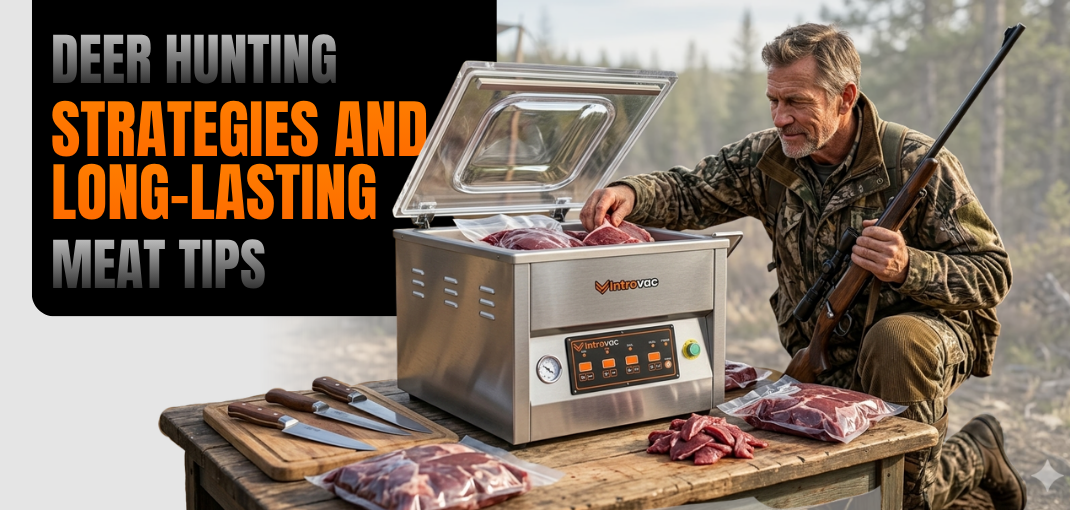
Chamber Vacuum Sealers
Ideal for:
- Heavy-duty packaging
- Larger deer processing operations
- Commercial-level sealing
- Long-term freezer storage
Chamber sealers provide superior sealing quality and work exceptionally well with wet products like fresh meat.
How to Vacuum Seal Deer Meat Properly
Step 1: Trim and Portion the Meat
Cut venison into manageable meal-sized portions before packaging.
Step 2: Pat Meat Dry
Excess moisture can affect sealing quality. Use paper towels to dry the meat surface.
Step 3: Use Quality Vacuum Bags
Always use high-quality vacuum packaging bags designed for meat storage.
Step 4: Vacuum and Seal
Place the meat inside the bag carefully and run the vacuum sealing cycle.
Step 5: Label Packages
Include:
- Cut type
- Date
- Weight
This helps organize freezer inventory efficiently.
How Long Does Vacuum-Sealed Venison Last?
Properly vacuum-sealed deer meat can remain fresh significantly longer than meat stored in ordinary freezer bags.
Average freezer life:
- Standard freezer bags: 3–6 months
- Vacuum-sealed venison: 1–3 years
Storage conditions and freezer temperature also affect longevity.
Best Cuts of Deer Meat to Vacuum Seal
Vacuum sealing works well for all venison cuts, including:
- Backstrap
- Tenderloin
- Ground venison
- Steaks
- Roasts
- Sausage
- Jerky portions
Hunters often package meat into meal-sized servings for convenience.
Deer Meat Processing Tips for Hunters
Age the Meat Properly
Aging venison under controlled temperatures improves tenderness and flavor.
Recommended aging:
- 3–7 days in cool conditions
Keep Equipment Clean
Sanitation is critical during processing. Always clean:
- Knives
- Tables
- Grinders
- Cutting boards
- Vacuum sealing equipment
Separate Cuts Carefully
Organize cuts based on cooking methods and usage.
Why Hunters Are Switching to Chamber Vacuum Sealers
Many serious hunters now prefer chamber vacuum sealers because they provide:
- Better sealing strength
- Superior air removal
- Longer shelf life
- Reliable seals for wet meat
- Commercial-grade performance
For hunters who process multiple deer each season, chamber vacuum sealers become a long-term investment in meat quality preservation.
Meal Prep Ideas Using Vacuum-Sealed Venison
Vacuum-sealed venison makes meal preparation easier throughout the year.
Popular meal prep options include:
- Venison steaks
- Ground meat packages
- Marinated cuts
- Slow cooker meals
- Jerky preparation kits
Hunters can prepare organized freezer meals immediately after processing.
Vacuum Packaging for Hunters and Fishermen
Vacuum packaging is not limited to deer meat alone. Hunters and outdoor enthusiasts also use vacuum sealers for:
- Fish storage
- Wild game birds
- Elk meat
- Duck breast
- Wild hog meat
- Camping meal prep
This makes vacuum sealers a versatile investment for outdoor lifestyles.
Choosing the Right Vacuum Packaging Bags
High-quality bags are essential for proper meat preservation.
Good vacuum bags should provide:
- Strong puncture resistance
- Air-tight sealing
- Freezer durability
- Moisture protection
Cheap bags often fail during long-term storage.
Food Safety Tips for Venison Storage
Hunters should always follow proper food safety practices.
Safe Storage Guidelines
- Freeze meat quickly
- Maintain freezer temperature below 0°F
- Avoid repeated thawing and refreezing
- Cook venison to safe internal temperatures
- Discard damaged packages
Proper packaging helps maintain safe storage conditions for longer periods.
Why Vacuum Packaging Saves Money for Hunters
Hunters invest significant time and money into hunting trips. Losing meat to freezer burn or spoilage wastes valuable harvest.
Vacuum sealing helps save money by:
- Reducing food waste
- Extending freezer storage
- Preserving expensive cuts
- Improving organization
- Supporting bulk meat processing
For many hunters, a vacuum sealer quickly pays for itself.
How Introvac Supports Hunters and Outdoor Enthusiasts
Introvac is committed to providing affordable vacuum packaging solutions for:
- Hunters
- Fishermen
- Home users
- Small stores
- Meat processors
- Outdoor enthusiasts
Our machines are designed to deliver reliable sealing performance while helping users preserve freshness and maximize food storage efficiency.
Whether you need a compact tabletop vacuum sealer or a powerful chamber vacuum packaging machine, Introvac offers dependable equipment designed for long-term use.
Final Thoughts
Successful deer hunting requires more than finding the perfect hunting spot. From understanding deer behavior to proper field dressing and long-term meat preservation, every step matters.
Hunters who invest in proper meat preservation techniques can enjoy fresh, high-quality venison throughout the year while reducing waste and protecting their harvest. Vacuum sealing has become one of the most effective methods for preserving deer meat because it extends shelf life, prevents freezer burn, and maintains flavor.
With reliable vacuum packaging solutions from Introvac, hunters can confidently preserve their venison and enjoy professional-quality food storage at home.
If you are looking for an affordable and efficient vacuum sealer for hunting season, Introvac offers dependable packaging solutions built to support your outdoor lifestyle.