
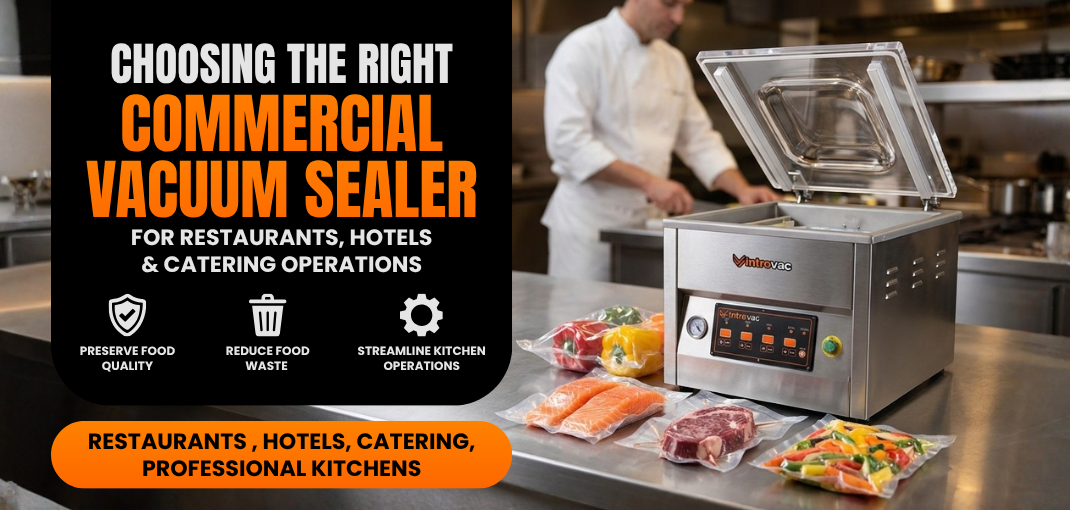
Restaurants, hotels, catering companies and professional kitchens handle large quantities of ingredients and prepared foods every day. From fresh meat and seafood to vegetables, sauces, marinades and ready-to-serve meal components, maintaining product quality while managing storage, preparation time and operating costs is a constant challenge. Traditional food storage methods can leave products exposed to air, moisture loss, freezer burn and unnecessary handling. As food-service businesses look for more consistent ways to organize their kitchen operations, commercial vacuum sealing has become an increasingly useful packaging solution.
Choosing the right commercial vacuum sealer, however, involves more than comparing machine prices or selecting the largest model available. Every food-service operation has different packaging requirements. A small restaurant preparing ingredients for daily service may need a compact tabletop chamber vacuum sealer, while a hotel kitchen, central production kitchen or catering company handling larger batches may require a machine with a larger chamber and greater production capacity. Understanding how vacuum sealing works, which foods can benefit from it and what features matter most can help businesses make a more informed equipment investment.
Whether you manage a restaurant, operate a catering company, oversee hotel food production or run a commercial kitchen, this guide explains how to evaluate vacuum packaging equipment and select a solution that fits your actual working requirements.
Why Restaurants, Hotels and Catering Businesses Use Commercial Vacuum Sealers
Food-service businesses need to balance food quality, preparation schedules, inventory management and operational efficiency. Ingredients are purchased in different quantities, preparation takes place throughout the day, and kitchens frequently need to store products for later use. Without an organized storage process, ingredients can become difficult to manage, portions may vary, and food can be discarded because it was not properly stored or used within the appropriate period.
A commercial vacuum sealer helps address some of these challenges by removing air from a compatible packaging pouch before creating a sealed package. Reducing the amount of air inside the package can limit exposure to oxygen, help protect food from certain quality changes and reduce contact with external contaminants when proper handling procedures are followed. It can also make portioning and inventory organization easier for busy kitchens.
For restaurants, vacuum sealing can support ingredient preparation, portion control and organized refrigeration. Catering companies can package suitable ingredients and prepared components ahead of scheduled events. Hotels can use vacuum packaging in their central kitchens, banquet departments and food preparation areas to organize ingredients for different outlets and service periods.
The benefits depend on the type of food, packaging material, storage temperature, handling practices and the vacuum sealer being used. Vacuum packaging is not a substitute for safe food handling or temperature control. It should be incorporated into an established food-safety system rather than treated as a way to make food safe indefinitely.
Understanding the Difference Between Commercial and Household Vacuum Sealers
One of the first decisions when purchasing vacuum packaging equipment is whether a household appliance or a commercial chamber vacuum sealer is appropriate for the operation. Although both types remove air from packaging, their construction and intended applications can differ considerably.
Basic household vacuum sealers are generally designed for occasional packaging and relatively limited workloads. They may be suitable for home food storage, but restaurants and catering businesses often require equipment capable of handling repeated packaging cycles throughout the working day. A machine that performs adequately for a few packages at home may become inconvenient when employees need to package dozens of portions during preparation.
Commercial chamber vacuum sealers offer a different approach. The food is placed inside a compatible pouch, which is positioned within the machine’s chamber. The lid closes, air is removed from the chamber, and the machine seals the pouch under controlled conditions. Once the cycle is complete, the chamber returns to normal atmospheric pressure, helping the package retain its vacuum.
This chamber-based process is particularly useful for professional kitchens because the machine can package many suitable products, including items with moisture, marinades and certain liquids, when the correct operating procedure and compatible packaging are used. It is important to remember that chamber size, pouch dimensions, seal bar length and machine configuration determine what can be packaged efficiently.
For businesses that regularly package wet ingredients, sauces, marinated meat or seafood, a chamber vacuum sealer is generally worth evaluating before purchasing an external-suction household-style machine.
Commercial Vacuum Sealing Solutions for Restaurants
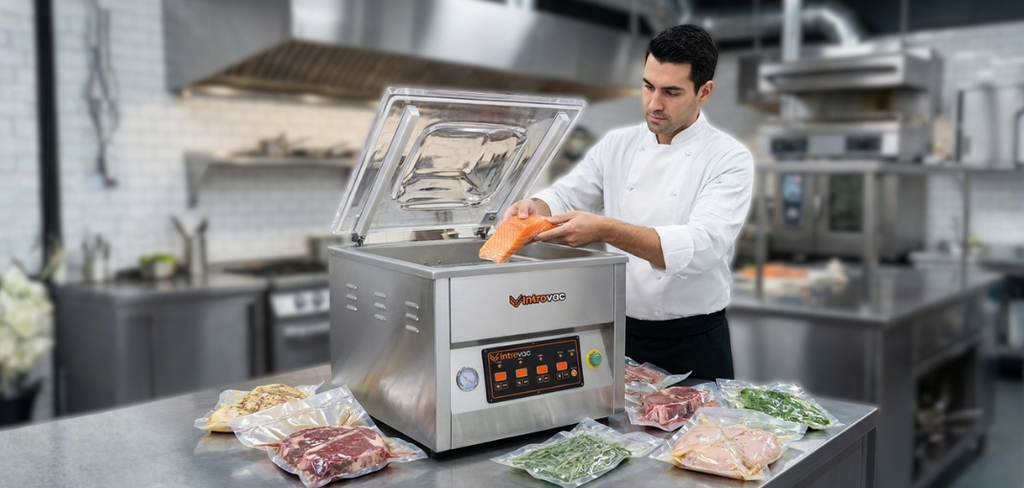
Restaurant kitchens operate under demanding schedules. Staff must prepare ingredients, manage orders, maintain consistent portions and keep food storage areas organized while serving customers throughout the day. A commercial vacuum sealer can support several stages of this process.
Better Organization of Ingredients and Portions
Restaurants frequently purchase ingredients in bulk to manage purchasing costs and maintain a consistent supply. However, bulk purchasing only makes operational sense when ingredients can be stored and used appropriately. Dividing suitable ingredients into smaller portions and vacuum packaging them can make inventory management easier.
For example, a restaurant may portion beef, chicken, fish or other suitable ingredients according to its standard menu requirements. Each package can be labeled with the product name, preparation date, batch information and any other details required by the kitchen’s food-safety procedures. Employees can then identify the contents more easily and follow an organized stock rotation system.
Portioning can also help maintain consistency between kitchen shifts. Instead of measuring ingredients from a large container every time an order is prepared, staff can work with pre-portioned packages that match established recipes and serving sizes.
Supporting Advance Food Preparation
Many restaurants prepare ingredients before peak service periods. Vegetables may be washed and portioned, meat may be divided according to menu requirements, and suitable sauces or meal components may be prepared in advance.
Vacuum packaging can support this workflow by providing a compact, sealed package for compatible ingredients. This can make it easier to organize prepared components in refrigerated storage and retrieve the required quantities during service.
Some professional kitchens also use vacuum packaging as part of sous vide cooking workflows. Food is placed in a suitable heat-resistant pouch, sealed and then cooked in a precisely controlled water bath. Restaurants considering this application should select packaging materials specifically approved for the intended cooking temperature and duration. They should also follow validated cooking, cooling and storage procedures.
Reducing Avoidable Food Waste
Food waste can affect restaurant profitability. Ingredients that are poorly organized, forgotten in storage or purchased in quantities greater than immediate requirements may eventually need to be discarded.
Vacuum sealing can help restaurants improve inventory organization by packaging suitable ingredients into clearly labeled portions. Smaller packages can also reduce repeated opening and handling of a larger bulk container. When combined with proper temperature management, stock rotation and purchasing controls, this approach can help businesses reduce avoidable waste.
However, vacuum packaging does not guarantee a particular shelf life. The actual storage period depends on the food, initial product condition, temperature, packaging integrity and applicable food-safety requirements. Restaurants should use established storage limits and never rely on the presence of a vacuum seal alone to determine whether food remains safe.
Vacuum Sealing for Hotels and Hospitality Operations
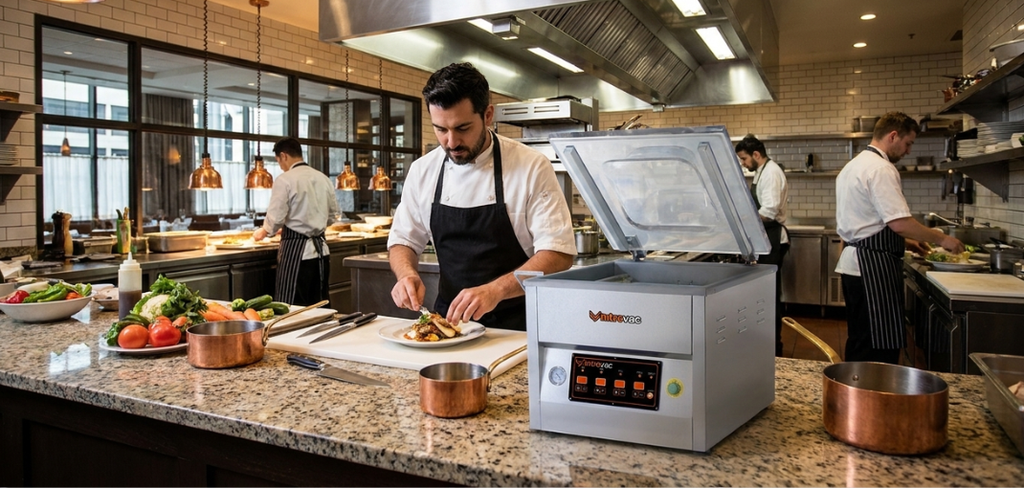
Hotels often have more complex food-service requirements than standalone restaurants. A hotel may operate multiple restaurants, breakfast services, banquet kitchens, room service departments, lounges and event catering facilities. These departments may share ingredients, preparation facilities and storage areas, making organized food management particularly important.
A commercial vacuum sealer can support hotel kitchens by helping staff package suitable ingredients and prepared components in clearly identified portions. Central production kitchens can prepare selected items in advance and distribute them to individual food-service departments according to their operational requirements.
Supporting Banquet and Event Preparation
Hotel banquet departments frequently prepare food for weddings, conferences, corporate functions and large private events. The number of guests, menu selections and service times can vary significantly from one event to another.
Advance preparation is therefore essential. A kitchen may need to portion meat, seafood, vegetables or other ingredients before an event begins. Vacuum packaging can help organize suitable products into individual portions or production batches, making them easier to identify and retrieve when required.
For example, a banquet kitchen preparing meals for a large conference may portion suitable proteins according to the menu and label each package with the relevant preparation and storage information. This allows kitchen employees to organize ingredients according to production schedules rather than repeatedly opening larger storage containers.
Managing Multiple Kitchen Departments
Large hotels may have several food preparation areas operating at the same time. Without a standardized packaging and labeling system, managing ingredients between departments can become complicated.
Vacuum-sealed portions can help establish a consistent approach to ingredient storage and identification. Hotels can introduce standardized package sizes, labeling procedures and inventory records across their kitchen departments. This can improve coordination between purchasing, food preparation and service teams.
Supporting Consistent Food Preparation
Hotels often need to maintain similar food quality across different outlets and service periods. Pre-portioned ingredients can help chefs follow standardized recipes and maintain consistency in preparation.
Vacuum packaging is one tool that can support this process, particularly when it is combined with documented recipes, controlled storage conditions and appropriate staff training.
How Catering Companies Can Benefit from Commercial Vacuum Packaging
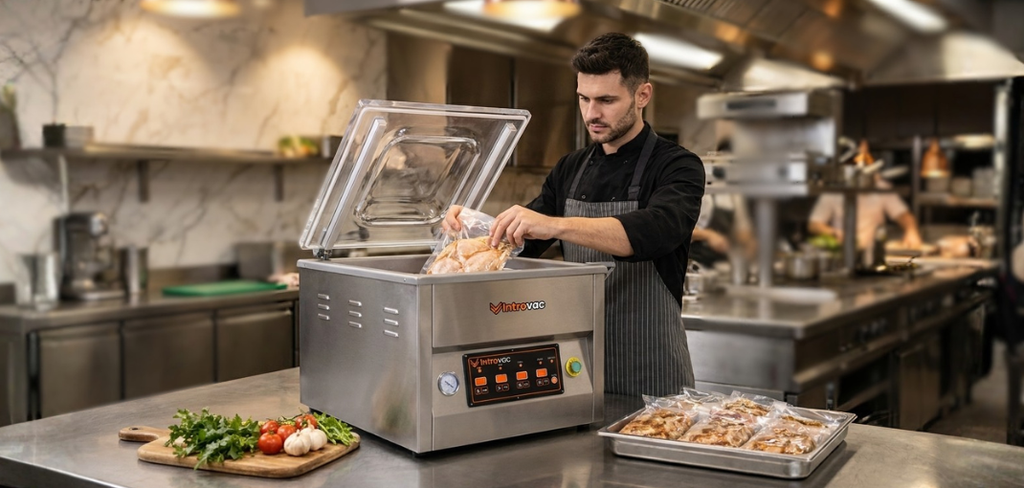
Catering businesses face a different set of challenges because food preparation and service may take place in separate locations. A catering company might prepare food in a central kitchen, transport ingredients to an event venue and complete final cooking or assembly at the location.
This requires careful coordination between preparation, packaging, storage and transportation. Commercial vacuum sealing can help catering operators organize suitable ingredients and food components before they leave the production kitchen.
Preparing Ingredients Before an Event
Catering companies often work with fixed event schedules. A wedding, corporate gathering or private function may require hundreds of servings to be prepared within a limited time.
Preparing selected ingredients in advance can help reduce pressure during the final production period. Meat portions, marinades, sauces and other compatible ingredients can be packaged in clearly identified batches. This allows kitchen teams to organize preparation work according to the event menu and expected serving quantities.
Vacuum packaging can also support repeatable preparation procedures. When ingredients are divided according to standardized recipes and portion sizes, employees can follow a more consistent workflow across multiple events.
Organizing Food for Transportation
Transporting food between a central kitchen and an event venue introduces additional handling requirements. Packages need to remain properly closed, identified and protected during transportation.
Vacuum-sealed pouches can provide a compact packaging format for suitable products. They can help reduce exposure to external handling and make portions easier to organize in insulated containers or temperature-controlled transport equipment.
The packaging itself does not maintain a safe transportation temperature. Perishable foods must remain within the appropriate temperature limits throughout transportation, and catering businesses should use suitable refrigeration, insulated containers and temperature-monitoring procedures.
Improving Batch Preparation
A catering business may prepare food for multiple events in the same week. Each event may have different menus, quantities and preparation deadlines.
Vacuum packaging can help staff divide ingredients into event-specific batches. Packages can be labeled with the event reference, product details, quantity and relevant handling information. This reduces confusion when several orders are being prepared simultaneously.
For businesses that regularly package large quantities, machine cycle time, chamber dimensions and the ability to accommodate the required pouch sizes should be considered before purchasing equipment.
What Foods Can Restaurants and Catering Businesses Vacuum Seal?
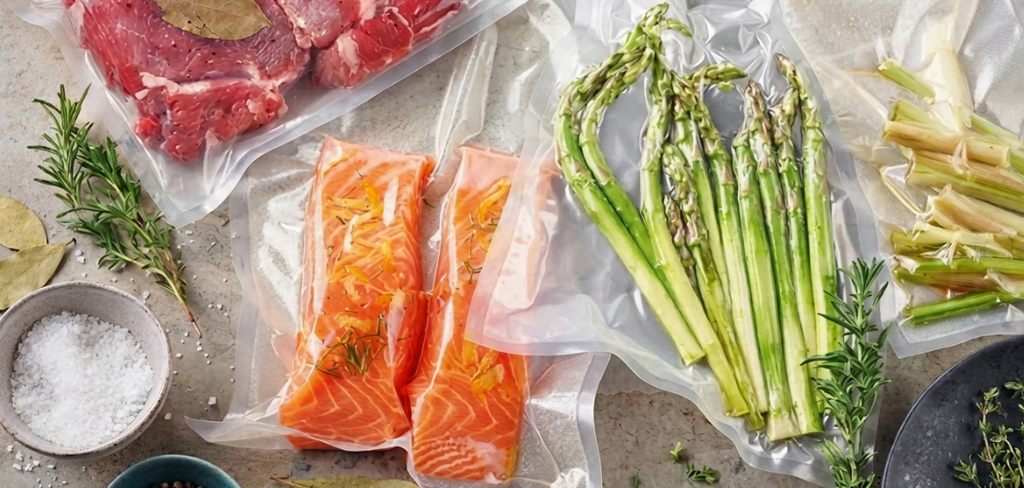
Commercial chamber vacuum sealers can be used for a wide range of compatible food products. The best results depend on selecting appropriate packaging materials and using the correct machine settings and handling procedures.
Meat and Poultry
Beef, chicken, lamb and other suitable meat products are commonly vacuum packaged in restaurants, butcher operations and catering kitchens. Portioning meat before packaging can make it easier to organize inventory and prepare ingredients according to individual recipes.
Marinated meat can also be packaged using a chamber vacuum sealer. The packaging process can help ingredients remain in contact with the marinade, although results vary depending on the recipe, product characteristics and processing method.
For more information, read Introvac’s guide on How Vacuum Sealing Cuts Marinating Time.
Seafood and Fish
Fish, shrimp and other seafood products require careful handling because quality can deteriorate quickly when temperature control is inadequate. Vacuum packaging can help protect suitable seafood products from air exposure and provide a more organized format for refrigerated or frozen storage.
Restaurants and seafood-focused catering businesses can use portioned packaging to prepare individual servings or production batches. The selected pouch must be compatible with the product and intended storage conditions.
Vegetables and Fruits
Certain vegetables and fruits can be vacuum packaged when the product condition and packaging method are appropriate. Portioning produce can help kitchen teams organize ingredients for meal preparation and reduce unnecessary handling.
However, some vegetables require blanching or other preparation before vacuum packaging, while delicate products may be crushed by the vacuum process. Certain produce also continues to respire after packaging. Businesses should follow product-specific food-safety and packaging guidance rather than assuming that every fruit or vegetable should be vacuum sealed.
Sauces, Marinades and Liquids
Commercial chamber vacuum sealers can be particularly useful for packaging certain liquids and liquid-rich ingredients. Because the pouch is processed inside the chamber, the system can handle suitable products that may be difficult to package with external-suction machines.
Nevertheless, liquids require attention during packaging. Temperature, fill level, pouch positioning and the vacuum cycle must be controlled to prevent liquid from being drawn toward the sealing area or spilling into the machine. Very hot liquids may boil at reduced pressure, so they should be handled according to the equipment manufacturer’s instructions.
Cheese and Dairy Products
Restaurants, hotels and catering companies that use cheese and other suitable dairy products may benefit from portioning and vacuum packaging. Smaller packages can help organize inventory and reduce repeated exposure to air after opening larger quantities.
Dairy products still require appropriate refrigerated storage and handling. Vacuum packaging should not be treated as a replacement for temperature control or established use-by dates.
Important Features to Consider When Choosing a Commercial Vacuum Sealer
Selecting a commercial vacuum sealer requires evaluating the machine against the actual demands of the kitchen. A machine that is too small may slow down production, while an oversized model may increase the initial investment without providing meaningful operational benefits.
Chamber Size and Packaging Dimensions
Chamber dimensions are among the most important specifications to check. The chamber must accommodate the products and pouches that the business intends to package.
Restaurants packaging individual meat portions may not need the same chamber size as a hotel kitchen packaging larger food-service batches. Catering businesses should consider both the dimensions of their largest products and the number of packages they expect to process during each preparation session.
Before purchasing, measure the largest intended pouch and compare it with the machine’s usable chamber dimensions and seal bar length.
Vacuum Pump Performance
The vacuum pump plays a central role in removing air from the packaging chamber. Its capacity can influence the vacuum cycle and overall packaging workflow.
Businesses should compare the pump specifications of shortlisted machines and consider how frequently the equipment will be used. A higher pump capacity may be useful in a demanding operation, but it should not be the only selection criterion. Chamber size, cycle duration, machine configuration and the nature of the packaged products also matter.
Sealing Bar Length and Seal Quality
A vacuum sealer must create a consistent seal to maintain package integrity. The sealing bar length determines the maximum practical pouch width that can be accommodated, while the sealing system and operating settings influence the quality of the seal.
Restaurants and catering businesses should test their intended pouch materials and sizes before committing to a machine. A reliable seal is particularly important when packaging liquids, marinated products and items intended for frozen storage.
Construction and Cleaning Requirements
Commercial kitchens operate under strict cleaning and hygiene procedures. Equipment should be suitable for the working environment and easy for employees to inspect and maintain.
Stainless-steel construction is a useful feature to consider when comparing commercial vacuum packaging machines. Businesses should also review the manufacturer’s cleaning instructions, maintenance requirements and access to replacement parts.
Production Volume and Cycle Time
A restaurant packaging a few dozen portions per day has different requirements from a central kitchen preparing hundreds of packages for multiple outlets.
Estimate the number of packages required per day, the size of each package and the available preparation time. Then compare the expected workload with the machine’s operating cycle and recommended duty requirements.
It is important not to select a machine based on an assumed production rate. Ask the manufacturer or supplier for verified cycle-time and throughput information for the specific model and packaging application.
Optional Features and Packaging Requirements
Some chamber vacuum sealers offer additional features such as gas flushing, different sealing configurations, soft-air functions or other options depending on the model.
Gas flushing may be useful for selected packaging applications where the package atmosphere needs to be modified. It is not automatically necessary for every restaurant or catering business, and the correct gas mixture, packaging material and process must be established for the intended product.
Always compare the standard equipment with the optional features available for the exact model being considered.
Choosing the Right Introvac Vacuum Sealer for Your Kitchen
Introvac offers a range of tabletop and larger chamber vacuum packaging machines designed for different packaging requirements. Rather than choosing a model simply because it has a higher price or larger appearance, food-service businesses should match the machine’s specifications to their product dimensions, packaging frequency and expected workload.
Introvac IVAC 310 – A Compact Tabletop Option
The Introvac IVAC 310 Tabletop Vacuum Sealer is an option for smaller operations that need a chamber vacuum packaging machine without moving immediately to a larger system.
Small restaurants, specialty food shops and businesses with moderate packaging requirements may consider this model when its chamber dimensions and sealing specifications match their products.
Its listed standard features include a digital control panel, stainless-steel construction, a clear see-through lid, bladder-activated sealing and a dome lid. Optional configurations include gas flush, a stainless-steel cart and an electric cut-off seal bar. Confirm the availability and compatibility of options before ordering.
Introvac IVAC 420 – For Businesses Requiring More Packaging Flexibility
The Introvac IVAC 420 Tabletop Vacuum Sealer is another option for food-service businesses evaluating chamber vacuum packaging equipment.
Restaurants, catering kitchens and smaller hospitality operations can compare this model with the IVAC 310 by reviewing chamber dimensions, sealing bar specifications, pump performance and the size of the packages they intend to produce.
The IVAC 420 includes a digital control panel, stainless-steel construction, a clear see-through lid, bladder-activated sealing and a dome lid. Optional features include gas flush, a stainless-steel cart and an electric cut-off seal bar.
Introvac IVAC 520QFT – For Higher-Volume Packaging Requirements
Businesses with more demanding packaging workloads may also evaluate the Introvac IVAC 520QFT Double Chamber Vacuum Sealer.
A double-chamber configuration can be relevant when an operation needs to organize a more continuous packaging workflow. While one chamber is processing a vacuum cycle, employees may be able to prepare the next batch, depending on the machine’s operating design and workplace setup.
This type of machine may be worth evaluating for larger catering operations, central kitchens and food production environments. However, the right choice depends on verified machine specifications, available space, expected production volume and the types of products being packaged.
Businesses should request the machine’s technical specifications and discuss their actual packaging requirements with Introvac before selecting a model.
Explore the complete Introvac Vacuum Packaging Machine Range to compare available tabletop and larger chamber models.
Common Mistakes to Avoid When Buying a Commercial Vacuum Sealer
One common mistake is purchasing equipment based only on its advertised price. The initial purchase cost is important, but businesses should also consider maintenance, replacement parts, packaging materials, operator training and the machine’s suitability for daily use.
Another mistake is selecting a machine without measuring the products and pouches that need to be packaged. A machine may appear suitable on paper but prove inconvenient if its chamber or sealing bar cannot accommodate the required packaging dimensions.
Some businesses also underestimate their production volume. A compact machine may be adequate during the initial stage of a restaurant’s operation but become a bottleneck when the business expands or begins supplying multiple locations.
Ignoring packaging material compatibility can create further problems. Not every pouch is suitable for every vacuum packaging application. Businesses should confirm that the packaging material is compatible with the machine, the food product and the intended storage or cooking conditions.
Finally, vacuum sealing should never be treated as a food-safety shortcut. Removing air does not eliminate all microorganisms, destroy toxins or make improperly stored food safe. Vacuum-packaged foods must be handled under appropriate food-safety procedures, including temperature controls and any applicable controls for reduced-oxygen packaging.
Food Safety and Storage Considerations for Commercial Kitchens
Food safety should remain a central part of every vacuum packaging program. Because vacuum packaging reduces oxygen inside the package, certain hazards associated with reduced-oxygen environments require particular attention. This is especially important for foods that are refrigerated for extended periods.
Restaurants, hotels and catering companies should establish written procedures covering product preparation, packaging, labeling, storage temperatures, cooling, transportation and stock rotation. Where required, these procedures should be incorporated into the business’s HACCP-based food-safety plan and reviewed with the relevant food-safety authority.
Perishable products should be kept at the temperatures required by applicable food codes and local regulations. Vacuum packaging does not replace refrigeration or freezing. Food should also be cooled using appropriate procedures before packaging when required by the product and process.
Packages should be labeled with the product name, packaging date, batch identification and any other information required by the business’s food-safety system. Employees should follow established use-by limits rather than assuming that vacuum-sealed products can be stored indefinitely.
For sous vide applications, businesses should use suitable heat-resistant pouches and validated time-and-temperature procedures. Cooking, cooling and storage requirements must be determined for the specific food and process.
How to Calculate the Right Machine Capacity for Your Business
Before selecting a vacuum sealer, estimate how many packages your kitchen needs to produce during a normal working day and during its busiest preparation period.
For example, a small restaurant might package ingredients in several preparation sessions throughout the day. A catering company may need to prepare a large number of packages within a short window before an event. A hotel central kitchen may operate a regular packaging schedule to supply multiple outlets.
Start by identifying the average number of packages required per day, the largest pouch dimensions, the type of products being packaged and the available production time. Next, review the machine’s chamber size, seal bar length, pump specifications and verified cycle time.
Do not rely on a machine’s theoretical maximum output without checking the assumptions behind the figure. Real-world productivity depends on product loading, pouch positioning, operator experience, package size, machine settings and the time required to unload and prepare the next batch.
If your business expects to expand, consider whether the selected model will accommodate future requirements. Buying a machine with adequate capacity can help avoid unnecessary equipment replacement as packaging needs increase.
Why Consider Introvac for Commercial Vacuum Packaging?
Selecting a vacuum packaging supplier is not only about purchasing a machine. Businesses also need to consider product availability, technical information, maintenance support and access to replacement parts.
Introvac offers a range of vacuum packaging machines, from compact tabletop models to larger chamber configurations. Its product range is intended to give businesses options for different packaging requirements rather than forcing every customer into a single machine configuration.
Introvac machines are powered by Promarks vacuum pump technology and share a spare-parts ecosystem with Promarks equipment. This is relevant for businesses evaluating long-term equipment maintenance and parts compatibility. Customers should confirm the specific parts and service arrangements applicable to their machine.
Before making a purchase, businesses should discuss the products they intend to package, their expected daily volume, required pouch sizes and any special applications with the Introvac team. Providing these details makes it easier to identify a suitable machine configuration and avoid purchasing equipment that does not match the operation.
Visit Introvac to explore its vacuum packaging solutions, or browse the complete product range to review available machines.
Frequently Asked Questions About Commercial Vacuum Sealers
What is the best commercial vacuum sealer for a restaurant?
The best commercial vacuum sealer depends on the restaurant’s packaging volume, product types, pouch dimensions and available preparation time. A compact tabletop chamber vacuum sealer may be suitable for a smaller restaurant, while a larger operation may require a machine with a bigger chamber or a double-chamber configuration. Compare the technical specifications before purchasing.
Can restaurants use chamber vacuum sealers for liquids and marinades?
Yes, suitable chamber vacuum sealers can package certain liquids, sauces and marinated foods. The product temperature, fill level, pouch material and machine settings must be controlled to prevent liquid from reaching the sealing area. Follow the manufacturer’s operating instructions for liquid packaging.
Is vacuum sealing useful for catering companies?
Vacuum sealing can help catering companies organize suitable ingredients into portions, prepare selected components in advance and manage event-specific packaging batches. It can also provide a compact sealed package for appropriate products during refrigerated or frozen storage and controlled transportation.
Can hotels use commercial vacuum sealers in central kitchens?
Yes. Hotels can use commercial vacuum packaging equipment in central kitchens to portion ingredients, organize prepared components and coordinate food production across different departments. The machine should be selected according to packaging volume, product dimensions and the hotel’s operational requirements.
Does vacuum sealing make food last longer?
Vacuum packaging can help slow certain quality changes associated with exposure to air, but it does not sterilize food or guarantee a specific shelf life. Storage temperature, product condition, packaging integrity and food-safety procedures determine how long a product can be stored safely.
Can a commercial vacuum sealer be used for sous vide cooking?
A suitable chamber vacuum sealer can prepare compatible pouches for sous vide applications. However, the pouch material must be approved for the intended cooking conditions, and the food must be cooked, cooled and stored according to validated food-safety procedures.
What should I check before buying a commercial vacuum sealer?
Check chamber dimensions, seal bar length, pump specifications, expected cycle time, pouch compatibility, construction, maintenance requirements and available support. Most importantly, compare these specifications with the products and package sizes your business actually needs.
Which Introvac vacuum sealer should I choose for my business?
The Introvac IVAC 310 and IVAC 420 are tabletop options, while the IVAC 520QFT offers a double-chamber configuration for businesses evaluating higher-volume packaging workflows. The right model depends on the actual workload and technical specifications. Contact Introvac with your packaging requirements before making a decision.
Find the Right Vacuum Packaging Solution for Your Business
Restaurants, hotels and catering companies need packaging equipment that fits their production requirements, supports organized food preparation and delivers consistent sealing performance. The right commercial vacuum sealer can become a valuable part of a professional kitchen’s daily workflow, helping employees manage portions, organize ingredients and prepare suitable products for storage.
The key is to choose equipment based on actual business needs rather than purchasing the largest or most expensive machine available. Consider the type of food you package, the number of packages you produce, the dimensions of your pouches and the operating conditions of your kitchen.
Whether you operate an independent restaurant, manage a hotel kitchen or run a growing catering business, Introvac offers vacuum packaging machines worth evaluating for your application.
Explore Introvac’s commercial vacuum sealing solutions: https://introvac.com/shop/
Contact the Introvac team: sales@introvac.com