
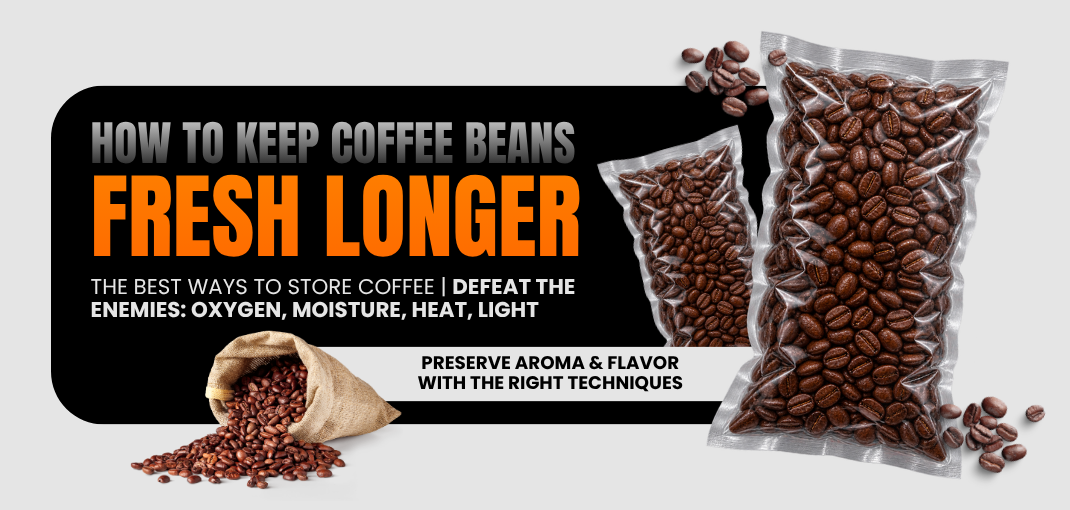
There is nothing more disappointing than opening a bag of expensive coffee beans, brewing a cup, and finding that the flavor isn’t as enjoyable as you expected. The beans may have had a rich, inviting aroma when you first opened the bag, but after a few days, that aroma can become weaker and the flavor may start to taste flat, with some of the brightness and character gradually disappearing. Coffee doesn’t suddenly “expire” after a specific number of days; instead, it slowly loses the compounds responsible for its aroma and flavor, and the way you store it can significantly affect how quickly this happens. Fortunately, keeping coffee fresh doesn’t require a complicated routine. Using proper storage methods and a few simple habits can help protect roasted coffee from its biggest enemies oxygen, moisture, heat, and light. For specialty coffee lovers, people who buy beans in larger quantities, or anyone who wants to store coffee for several weeks, vacuum sealing can provide an additional layer of protection. Understanding what causes coffee to go stale and how to store it properly can help you preserve more of the flavor and aroma in every cup.
What Makes Coffee Beans Go Stale?
Roasted coffee is a surprisingly complex product. During the roasting process, hundreds of chemical reactions create the rich aromas and flavors that make each coffee unique. Once roasting is complete, however, those compounds don’t remain stable forever. The beans continue to release carbon dioxide while gradually reacting with the surrounding environment, and several factors can speed up this natural aging process, eventually affecting the coffee’s aroma, flavor, and overall freshness.
1. Oxygen
Oxygen is one of the biggest enemies of roasted coffee.
- When coffee is exposed to air, oxidation gradually changes the oils and other compounds inside the beans. Over time, this can reduce desirable aromas and contribute to stale or unpleasant flavors.
- This is why simply leaving an opened bag of coffee sitting on the kitchen counter isn’t ideal.
- The more air surrounding your beans and the more frequently fresh air enters the container the greater the opportunity for oxidation.
2. Moisture
- Coffee beans are highly sensitive to moisture.
- Humidity can affect the beans and introduce unwanted changes in flavor. In addition, moisture can encourage coffee to absorb odors from its surroundings.
- A refrigerator may seem like a logical place to store coffee because it is cool, but the constant temperature changes and humid environment can create problems when the container is repeatedly opened.
- For everyday storage, a dry environment is generally a better choice.
3. Heat
- Higher temperatures can accelerate the chemical reactions responsible for coffee degradation.
- You don’t need to refrigerate your everyday coffee. Instead, keep it away from hot areas such as ovens, stovetops, sunny windows, or other sources of heat.
- A cool cupboard is usually a much better location.
4. Light
- Direct sunlight isn’t good for coffee either.
- Light can contribute to the degradation of coffee’s delicate compounds, particularly when beans are stored in transparent containers.
- That’s one reason many quality coffee bags use opaque packaging.
5. Time
- Even under excellent storage conditions, coffee doesn’t remain exactly the same forever.
- Freshness is a gradual process. The goal of good storage isn’t to make coffee immortal. It is to slow down the changes that cause the most noticeable loss of aroma and flavor.
Freshly Roasted Coffee Needs Time Too
One interesting thing about coffee freshness is that freshly roasted beans aren’t always ready to deliver their best flavor immediately. During roasting, carbon dioxide builds up inside the beans, and after roasting, it gradually escapes through a process known as degassing or off-gassing. Brewing the beans too soon particularly for espresso can cause excess CO₂ to interfere with extraction, resulting in a sharp, uneven, or difficult-to-balance cup. This is why many coffee enthusiasts allow freshly roasted beans to rest for several days before brewing. The ideal resting time varies depending on the roast level, coffee, and brewing method, with espresso often benefiting from a longer resting period than filter coffee. In other words, when it comes to coffee, the freshest beans aren’t necessarily the best beans to brew right away.
How Long Do Coffee Beans Stay Fresh?
There isn’t one universal expiration date for roasted coffee. A bag of beans stored poorly may lose noticeable quality quickly, while properly stored coffee can remain enjoyable for considerably longer.
As a general guide:
| Time After Roasting | What You Can Expect |
|---|---|
| First few days | Beans are still releasing significant amounts of CO₂ |
| About 1–2 weeks | Often an excellent period for brewing |
| 2–4 weeks | Flavor can remain very good when stored properly |
| 1–3 months | Quality gradually declines, but beans may still be enjoyable |
| Several months+ | Proper long-term storage becomes increasingly important |
These are guidelines, not strict deadlines.
A coffee that is three weeks old isn’t automatically stale, and a coffee that is only one week old isn’t automatically excellent. Roast level, bean characteristics, packaging, storage conditions, and brewing technique all matter.
The Best Way to Store Coffee for Everyday Use
For most people, the simplest way to store coffee is often the most effective. If your coffee comes in a high-quality bag with a one-way degassing valve, it’s best to keep the beans in their original packaging until you’re ready to use them. These bags are specifically designed to allow carbon dioxide released by freshly roasted beans to escape while limiting the amount of outside air entering the package, helping protect the coffee’s aroma and flavor for longer.
Once opened, keep the bag tightly closed and store it somewhere:
- Cool
- Dry
- Dark
- Away from strong odors
- Away from heat
- Away from direct sunlight
Try to minimize how long the bag remains open while you’re measuring or grinding your coffee.
For someone who finishes a bag within a week or two, this simple approach may be all that’s necessary.
Does Vacuum Sealing Keep Coffee Fresh?
Reducing the amount of oxygen surrounding coffee can help slow oxidation, which is where vacuum sealing offers a practical advantage. Unlike a traditional airtight container, which can still leave a considerable amount of air trapped around the beans, vacuum sealing removes much of the air from the package before it is sealed, leaving less oxygen in contact with the coffee. This can be especially useful for coffee roasters, cafés, businesses, and home coffee enthusiasts who need to store beans for longer periods or portion them for later use. However, freshly roasted coffee continues to release carbon dioxide, so it should not simply be sealed immediately without considering the degassing process, as pressure can build inside the package. That’s why packaging for freshly roasted coffee commonly uses a one-way valve, allowing CO₂ to escape while helping prevent outside air from entering.
Vacuum Sealing Coffee for Long-Term Storage
Vacuum sealing becomes especially useful when you have more coffee than you plan to consume in the near future, such as when purchasing several bags of a limited-edition or seasonal roast. Instead of opening every bag and repeatedly exposing the entire supply to oxygen, you can divide the beans into convenient portions and vacuum seal each portion separately. This approach helps minimize oxygen exposure and allows you to open only the amount you need while keeping the remaining coffee sealed and protected for later use.
This has two major advantages.
Less Oxygen Exposure
- Once a package is vacuum sealed, there is significantly less air surrounding the beans.
Smaller Portions
- You only open the amount you intend to use.
- This is important because every time a large package is opened, fresh air enters and replaces the protective atmosphere that was previously inside.
- Small portions allow you to preserve the remaining coffee while using one package.
Should You Vacuum Seal Whole Beans or Ground Coffee?
Whole coffee beans are generally the better choice when it comes to keeping coffee fresh. Grinding exposes much more of the coffee to the surrounding air, giving oxygen greater access to the beans and allowing their aroma and flavor to fade more quickly. It’s similar to cutting a whole apple into small pieces the more surface area exposed, the faster it reacts with the air. For this reason, it’s best to grind your coffee just before brewing whenever possible. If you’re storing coffee for a longer period, keeping the beans whole and grinding only what you need can help preserve their aroma, flavor, and overall quality.
Can You Vacuum Seal Ground Coffee?
You can vacuum seal ground coffee, but it requires a little more care because ground coffee loses its aroma and flavor faster than whole beans due to its greater surface area and increased exposure to oxygen. If you need to store ground coffee for an extended period, consider dividing it into small, single-use portions rather than sealing a large quantity in one package. For example, instead of vacuum sealing an entire month’s supply in one bag, you can create several smaller packages and open each one only when you’re ready to use it. This minimizes repeated exposure to oxygen and helps each portion retain its freshness for longer.
What About Freezing Coffee?
Freezing is another option for storing coffee over the long term, especially when you have specialty beans that you don’t plan to use for several weeks or months. The key is to protect the beans from moisture and avoid repeated temperature changes. If you decide to freeze your coffee, divide it into individual portions before placing it in the freezer so you only remove what you need each time. Vacuum sealing can be particularly helpful because it creates a tightly sealed package and reduces exposure to air and moisture. When you’re ready to use a portion, let it return to room temperature while it remains sealed to help prevent condensation from forming on the beans. Once thawed, it’s best not to repeatedly freeze and thaw the same portion.
Is a Coffee Canister Better Than the Original Bag?
Not necessarily, A good coffee bag with a one-way valve is already designed specifically for storing freshly roasted coffee. For everyday coffee drinkers who finish a bag quickly, transferring the beans to another container may provide little practical improvement.
A quality airtight or vacuum-storage container can become more useful when:
- You buy larger quantities of coffee.
- You take several weeks to finish a bag.
- You want to portion coffee for later.
- You regularly buy expensive specialty beans.
- You need additional protection from oxygen.
- You want to store coffee for longer periods.
The important thing is not simply buying a particular type of container. The objective is to reduce exposure to the conditions that accelerate staling.
What Not to Do With Your Coffee
- Some common storage habits can actually make things worse.
Don’t Store Coffee Above the Stove
- Heat from cooking can repeatedly warm the beans.
Don’t Leave Coffee in Direct Sunlight
- A bright kitchen counter may look convenient, but sunlight isn’t ideal for long-term storage.
Don’t Store Coffee Next to Strong-Smelling Foods
- Coffee can absorb surrounding odors. Keeping it next to spices, onions, or other strongly scented foods isn’t recommended.
Don’t Open a Large Package Every Day
- If you’re storing a large quantity of coffee, repeatedly exposing the entire supply to air can accelerate quality loss.
- Portioning can solve this problem.
Don’t Grind Everything in Advance
- Freshly ground coffee loses quality faster than whole beans.
- If possible, grind only what you need for each brewing session.
Don’t Assume Older Coffee Is Automatically Undrinkable
- Coffee doesn’t suddenly become bad on a specific date.
- Older beans may simply have less aroma, sweetness, complexity, or brightness than they had when they were fresher.
- Taste the coffee before deciding whether it is still worth brewing.
A Simple Coffee Storage Strategy
You don’t need an elaborate setup to improve coffee freshness.
For everyday drinking:
Step 1: Buy freshly roasted whole beans.
Look for a roast date whenever possible.
Step 2: Keep them protected from heat, moisture, light, and air.
A cool, dry cupboard is usually a good starting point.
Step 3: Keep the original packaging if it has a one-way valve.
There is often no reason to immediately transfer freshly roasted beans.
Step 4: Close the package tightly after every use.
Don’t leave the bag open while you prepare your coffee.
Step 5: Grind immediately before brewing.
Whole beans generally retain their qualities better than pre-ground coffee.
Step 6: For longer storage, consider portioning and vacuum sealing.
This is especially useful for expensive or seasonal beans you don’t plan to consume soon.
Why Vacuum Sealing Makes Sense for Coffee Lovers
Vacuum sealing isn’t a magic solution that stops coffee from aging, and beans will naturally change over time even when stored carefully. However, reducing oxygen exposure can help slow oxidation, one of the key factors behind the gradual loss of coffee’s aroma and flavor. This makes vacuum sealing particularly useful when you want to preserve coffee beyond its normal short-term storage period. For someone who buys a single bag of coffee each week, the original packaging may be more than sufficient, but if you purchase several bags at once, store specialty beans for later, prepare individual portions, or manage coffee inventory for a café or business, vacuum sealing can provide a more controlled storage environment and help protect the quality of your coffee for longer.
The Bottom Line
Keeping coffee fresh doesn’t have to be complicated. The key is to protect your beans from oxygen, moisture, heat, and light by storing whole beans in a properly sealed package in a cool, dry place and grinding only what you need before brewing. If you plan to finish your coffee within a couple of weeks, the original one-way valve bag may be all you need. However, if you’re buying coffee in larger quantities, storing beans for longer periods, or preserving a special batch, vacuum sealing can help reduce oxygen exposure and provide additional protection. Ultimately, the goal isn’t to preserve coffee forever, it’s to slow the natural aging process enough to help your beans retain the aroma and flavor that make your coffee enjoyable.
Keep Your Coffee Protected With Introvac
For coffee enthusiasts and businesses looking for a practical way to reduce air exposure during storage, Introvac vacuum packaging solutions offer a convenient option for sealing coffee portions and other food products. Whether you’re preserving specialty coffee at home, preparing portions for later use, or managing coffee products in a commercial environment, reducing oxygen exposure can help protect freshness, maintain quality, and get more value from every batch you purchase.
Store smarter. Brew fresher. Waste less with Introvac.