
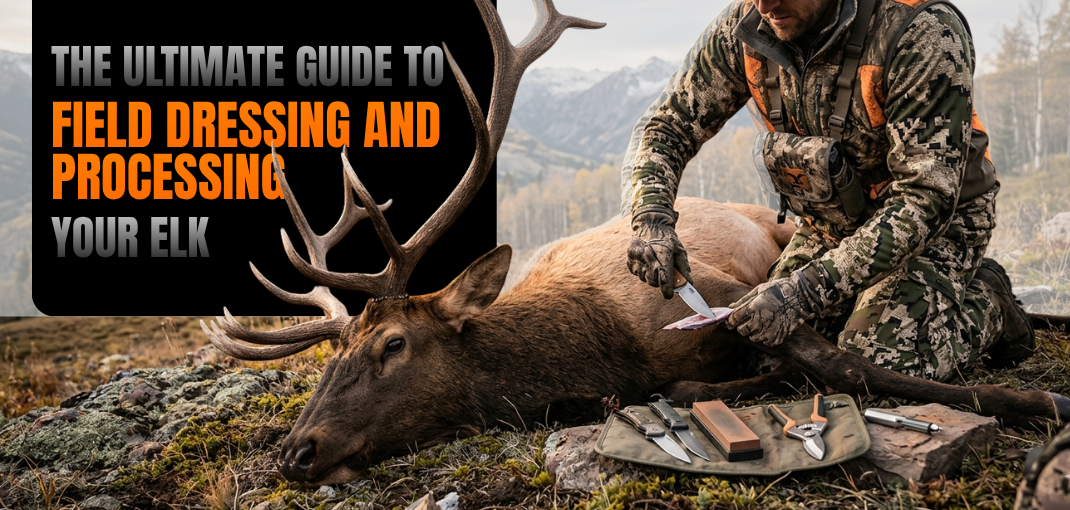
Introduction: From the Hunt to the Harvest
Harvesting an elk is one of the most rewarding moments in big-game hunting. But once your bull elk or cow elk is down, the real work begins. Proper wild game field care, especially field dressing a bull elk, is crucial to ensure your meat stays clean, fresh, and safe.
Elk meat is lean, organic, and extremely nutritious but without correct field dressing, skinning, cooling, and packaging, it can spoil quickly. Whether you’re a first-time hunter searching for how to field dress an elk for beginners or an experienced backcountry hunter looking to refine your technique, this guide covers everything from elk gutting to elk hindquarter cuts and long-term storage using vacuum sealers.
1. Why Proper Field Dressing Matters
Proper field dressing an elk is the first and most important step in protecting your harvest. Once the elk drops, internal heat and bacteria start affecting the meat. Fast field processing helps:
- Cool the carcass quickly
- Prevent spoilage
- Keep meat clean and edible
- Enhance flavor and texture
- Reduce bacterial growth
In every elk field dressing guide, one rule is universal:
The faster you cool it below 40°F (4°C), the better your meat will taste and last.
2. Essential Gear for Elk Field Dressing
To perform elk gutting, skinning, and quartering efficiently, pack these essential tools:
- Sharp hunting knife
- Bone or folding saw
- Shoulder-length game gloves
- Paracord or game hoist
- Breathable game bags
- Ice packs or coolers
- Headlamp
- Cleaning wipes and towels
With the right gear, even beginners can complete how to gut an elk step by step cleanly and safely.
3. Step-by-Step Guide: How to Field Dress an Elk
This section includes the full elk field dressing guide optimized for clarity and accuracy.
Step 1: Confirm Safety
- Ensure the elk has expired
- Tag your harvest
- Move to a shaded, stable area
Step 2: Position the Elk
Lay it on its back with legs spread. This gives you full access for gutting.
Step 3: Initial Belly Cut (No Puncture Technique)
Start at the sternum and cut toward the pelvis, lifting the hide with your fingers to avoid puncturing the stomach or intestines.
Step 4: Open the Cavity
Carefully cut through the muscle wall. Avoid cutting the sternum if preserving the cape for taxidermy.
Step 5: Elk Gutting – Removing Organs
- Cut the diaphragm
- Separate windpipe
- Gently roll organs out
Avoid puncturing the bladder or stomach. Any contamination must be cleaned immediately.
Step 6: Begin Cooling
Prop open the cavity with sticks or rocks to allow airflow.
If temperatures are warm, use snow or ice packs.
4. How to Skin and Quarter an Elk in the Field
If you’re hunting far from base camp, you’ll need to quarter on-site.
Skinning the Elk
Peel the hide starting from the belly cut. Pull downward using gravity, cutting connective tissue as needed.
Quartering
Front Quarters
Cut between shoulder blade and rib cage, no bone cutting needed.
Hind Quarters
Separate at the ball joint or use a saw if necessary.
Backstraps
Run your knife along the backbone and ribs.
Tenderloins
These delicate cuts sit inside the cavity, remove them early.
Pack all cuts into breathable game bags for quick cooling.
5. Breaking Down Elk Hindquarter Cuts
From the hindquarters, you can create:
- Sirloin roast
- Top round
- Bottom round
- Eye of round
- Stew cuts
- Jerky strips
These are high-value cuts and deserve proper trimming and labeling.
6. Butchering Your Elk at Home
Once cooled, continue processing:
Trim & Clean
Remove hair, dirt, and bloodshot tissue.
Debone and Separate Muscles
Follow natural seams for roasts and steaks.
Grinding
Keep meat cold to avoid smearing in the grinder.
7. Packaging & Storing Elk Meat (Vacuum Sealing Recommended)
Three common methods:
- Butcher paper – Short-term
- Plastic wrap – Not airtight
- Vacuum sealing – Best long-term option
Why Vacuum Sealing Is the Gold Standard
- Stops freezer burn
- Keeps elk meat fresh for 12–18 months
- Protects against moisture loss
- Stores compactly
How to Vacuum Seal Elk Meat Properly
- Chill meat before sealing
- Use high-quality vacuum bags
- Label each cut and date
- Store at 0°F for best results
8. Cooking Your Elk Harvest
Best cooking methods include:
- Grilling backstraps and steaks
- Slow smoking roasts
- Sous vide in vacuum bags
- Making jerky and snack sticks
Elk pairs beautifully with herbs like rosemary, thyme, garlic, and pepper.
9. Questions Every Hunter Has in the Field (FAQ Section)
Q1: How do you field dress an elk without ruining the meat?
By avoiding stomach punctures, cooling quickly, and keeping cuts clean.
Q2: How long does it take to field dress an elk?
Experienced hunters can do it in 20–40 minutes; beginners may take an hour.
Q3: Should I gut the elk or quarter it first?
If weather is hot or your pack-out is long, quartering immediately is better.
Q4: How do I field dress an elk if I’m alone?
Lay the elk on its side, use paracord to secure legs, and work in stages.
Q5: Do I need to remove the hide right away?
Yes, removing the hide helps cooling and prevents spoilage.
Q6: Can I download this guide as a PDF?
Yes, you can save this how to field dress an elk PDF by printing the webpage.
10. Why Every Elk Hunter Should Own an Introvac Vacuum Sealer
Introvac vacuum sealers offer:
- Strong suction for tough game cuts
- Stainless steel construction
- Large bag compatibility
- Long-term storage protection
Perfect for elk steaks, roasts, jerky, and bulk wild game processing.
Conclusion: Respect the Hunt – Preserve the Harvest
Field dressing and processing an elk is a skill that honors the animal and the hunt. With proper elk field care, skinning, quartering, and vacuum sealing, you ensure that every cut remains high-quality from the backcountry to your dinner table.
With the right tools, especially a reliable vacuum sealer from Introvac! your elk harvest stays fresh, flavorful, and preserved for months.