In today’s technology-driven world, electronic components are at the heart of nearly every industry, from consumer electronics and automotive systems to medical devices and aerospace applications. While these components are designed for precision and performance, they are also highly vulnerable to one silent but destructive threat: moisture.
Moisture intrusion can compromise the integrity, functionality, and lifespan of electronic components, leading to costly failures, product recalls, and damaged reputations. For manufacturers, suppliers, and distributors, ensuring effective moisture protection is not just an option, it’s a necessity.
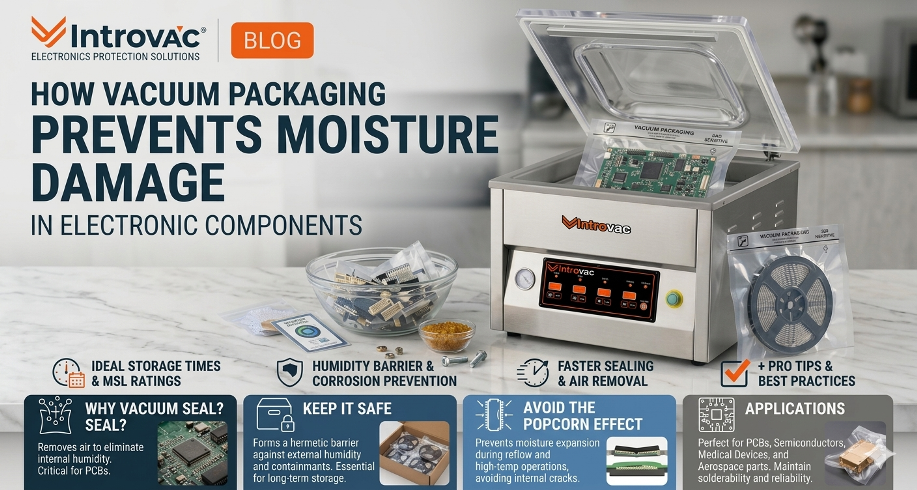
One of the most reliable and increasingly adopted solutions is vacuum packaging. By removing air and sealing components in a controlled environment, vacuum packaging provides a powerful barrier against humidity and environmental contaminants.
This comprehensive guide explores how vacuum packaging prevents moisture damage in electronic components, why it is superior to traditional methods, and how businesses can implement it effectively.
Understanding Moisture Damage in Electronic Components
Electronic components, especially sensitive ones like printed circuit boards (PCBs), semiconductors, and microchips, are highly susceptible to moisture. Even minimal exposure can lead to serious issues over time.
Moisture can enter through ambient humidity, improper storage conditions, or inadequate packaging. Once inside, it can trigger a range of problems that are often irreversible.
One of the most common issues is corrosion. Moisture reacts with metal surfaces, leading to oxidation that weakens connections and degrades performance. Over time, this can cause complete circuit failure.
Another major concern is short circuits. Water is a conductive medium, and when it bridges electrical pathways, it can disrupt normal operations and damage components.
In high-temperature environments, moisture trapped inside components can expand rapidly, leading to internal stress. This phenomenon, often referred to as the “popcorn effect” in semiconductors, can cause microcracks and delamination.
Additionally, moisture promotes the growth of mold and contamination, which further compromises sensitive electronics, especially in long-term storage or shipping scenarios.
Why Traditional Moisture Protection Methods Fall Short
Many businesses rely on conventional moisture protection techniques such as desiccants, anti-static bags, or simple sealed packaging. While these methods offer some level of protection, they are often insufficient in demanding industrial environments.
Desiccants absorb moisture within a limited capacity. Once saturated, they become ineffective and require replacement. If not monitored properly, they can give a false sense of security.
Anti-static bags primarily protect against electrostatic discharge (ESD), not moisture. While some variants include moisture barrier properties, they are not foolproof, especially in high-humidity regions.
Standard sealing methods trap air inside the packaging. Since air contains moisture, this means that even sealed packages can still expose components to humidity over time.
Temperature fluctuations during shipping can also cause condensation inside packaging, further increasing the risk of damage.
These limitations highlight the need for a more robust and reliable solution.
What Is Vacuum Packaging and How Does It Work
Vacuum packaging is a process that removes air from a package before sealing it. By eliminating air, it also removes the majority of moisture and oxygen present within the packaging environment.
The process typically involves placing electronic components inside a specialized vacuum pouch. A vacuum packaging machine then extracts air from the pouch and seals it tightly, creating a controlled, low-moisture environment.
In industrial applications, advanced vacuum packaging systems ensure consistent sealing quality, precise vacuum levels, and compatibility with various packaging materials.
The result is a hermetically sealed package that significantly reduces the risk of moisture ingress.
How Vacuum Packaging Prevents Moisture Damage
Vacuum packaging provides multiple layers of protection against moisture-related issues, making it one of the most effective solutions available.
Eliminates Moisture-Laden Air
Air naturally contains water vapor. By removing air from the package, vacuum packaging drastically reduces the amount of moisture present inside. This creates an environment where corrosion and condensation are far less likely to occur.
Prevents Condensation During Temperature Changes
Temperature variations during storage and transportation can cause moisture in the air to condense into water droplets. Since vacuum packaging removes most of the air, the risk of condensation forming inside the package is significantly minimized.
Creates a Barrier Against External Humidity
High-quality vacuum pouches act as a barrier against external environmental factors, including humidity. Once sealed, the package prevents moisture from entering, even in humid climates.
Protects Against Oxidation and Corrosion
By reducing oxygen levels along with moisture, vacuum packaging slows down oxidation processes. This is particularly important for metal components and connectors that are prone to rust and degradation.
Enhances Shelf Life and Reliability
Vacuum-sealed electronic components maintain their quality over extended periods. This is especially beneficial for manufacturers and distributors who need to store components for long durations or ship them internationally.
Applications of Vacuum Packaging in Electronics
- Vacuum packaging is widely used across various segments of the electronics industry.
- Printed circuit boards benefit significantly from vacuum sealing, especially during storage before assembly. It helps maintain solderability and prevents contamination.
- Semiconductors and integrated circuits require strict moisture control to avoid internal damage. Vacuum packaging ensures compliance with moisture sensitivity levels (MSL).
- Connectors, cables, and wiring assemblies are protected from corrosion, ensuring reliable performance in critical applications.
- Medical and aerospace electronics, which demand the highest level of reliability, also rely on vacuum packaging for safe storage and transport.
- Additionally, vacuum packaging is used in the protection of spare parts, ensuring they remain in optimal condition until needed.
Why Vacuum Packaging Is Ideal for Humid Climates
In regions with high humidity levels, such as coastal areas and tropical climates, moisture protection becomes even more challenging.
Ambient humidity can quickly penetrate traditional packaging, leading to rapid degradation of electronic components. Vacuum packaging offers a practical solution by isolating components from external environmental conditions.
By creating a sealed, low-moisture environment, vacuum packaging ensures consistent protection regardless of external humidity levels. This makes it particularly valuable for businesses operating in regions where moisture control is difficult to maintain.
Integrating Vacuum Packaging into Your Operations
Implementing vacuum packaging for electronics requires the right combination of equipment, materials, and processes.
Choosing the right vacuum packaging machine is critical. Industrial-grade machines provide consistent vacuum levels, reliable sealing, and high throughput, making them suitable for large-scale operations.
Selecting appropriate vacuum pouches is equally important. Moisture barrier bags with high puncture resistance and low permeability offer the best protection.
In some cases, combining vacuum packaging with desiccants and humidity indicators can provide an additional layer of assurance, especially for highly sensitive components.
Automation can further enhance efficiency, reducing manual handling and ensuring consistent packaging quality.
Training staff on proper packaging procedures ensures that the system operates effectively and delivers the desired results.
Advantages of Vacuum Packaging for Electronics Businesses
- Adopting vacuum packaging offers several strategic advantages for manufacturers and suppliers.
- It reduces product losses caused by moisture damage, leading to significant cost savings over time.
- It enhances product quality and reliability, improving customer satisfaction and brand reputation.
- It enables compliance with industry standards and regulations related to moisture-sensitive devices.
- It supports global distribution by ensuring components remain protected during long transit times.
- It also provides a competitive edge by demonstrating a commitment to quality and innovation.
Common Mistakes to Avoid
- While vacuum packaging is highly effective, improper implementation can reduce its benefits.
- Using low-quality packaging materials can compromise the seal and allow moisture ingress.
- Inadequate vacuum levels may leave residual air inside the package, reducing effectiveness.
- Improper sealing techniques can result in leaks or weak seals.
- Overlooking storage conditions after packaging can also lead to issues, especially if packages are exposed to physical damage.
- Regular maintenance of vacuum packaging equipment is essential to ensure consistent performance.
The Future of Moisture Protection in Electronics
As electronic components become smaller and more complex, their sensitivity to environmental factors continues to increase. This makes advanced packaging solutions more important than ever.
Vacuum packaging, combined with innovations such as smart packaging and real-time monitoring, is expected to play a central role in the future of electronics protection.
Manufacturers are increasingly adopting integrated solutions that combine vacuum sealing with moisture barrier materials, desiccants, and digital tracking systems.
These advancements will further enhance reliability, reduce risks, and support the growing demands of global supply chains.
Conclusion
Moisture damage is one of the most significant threats to electronic components, capable of causing corrosion, short circuits, and long-term reliability issues. Traditional protection methods often fall short, especially in challenging environments and extended storage conditions.
Vacuum packaging offers a proven, efficient, and scalable solution by eliminating moisture-laden air, preventing condensation, and creating a strong barrier against external humidity. Its ability to protect sensitive components makes it an essential tool for modern electronics manufacturing and distribution.
For businesses looking to improve product quality, reduce losses, and ensure reliable performance, integrating vacuum packaging into their operations is a strategic move that delivers long-term value.
As industries continue to evolve, investing in advanced moisture protection solutions like vacuum packaging is not just a technical upgrade, it is a commitment to excellence, reliability, and customer trust.