
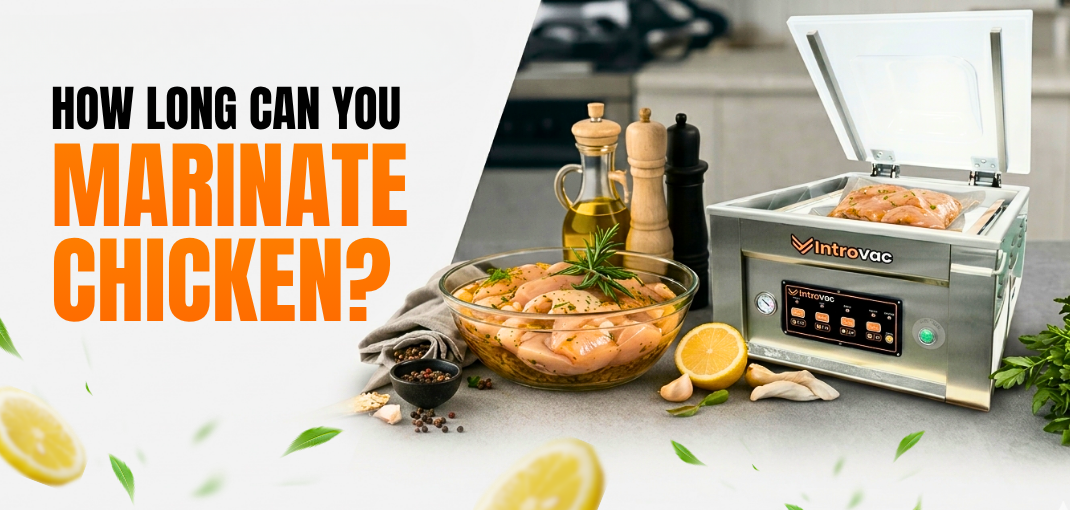
If you’ve ever wondered how long chicken should be marinated for the best flavor and texture, you’re not alone. Whether you’re preparing a meal at home or managing food production in a commercial kitchen, proper marination can make a significant difference in taste, tenderness, and moisture retention.
This guide covers recommended marination times, food safety practices, and how vacuum sealing can help speed up the marination process while improving consistency.
Why Marinating Chicken Is Important
Marination does more than add flavor. A properly balanced marinade can help:
- Improve tenderness
- Increase moisture retention
- Enhance flavor throughout the surface of the meat
- Improve cooking results
Most marinades contain:
- Acidic ingredients such as lemon juice, vinegar, or yogurt
- Oils that help retain moisture
- Herbs, spices, and seasonings that add flavor
When used correctly, marinades help improve the eating experience by enhancing both flavor and texture.
Recommended Marination Times
The ideal marination time depends on the size of the chicken pieces and the type of marinade being used.
| Time | Result |
|---|---|
| 15–30 minutes | Light surface flavor |
| 1–4 hours | Ideal for most recipes |
| 6–12 hours | Stronger flavor penetration |
| Up to 24 hours | Suitable for large or bone-in cuts |
For most applications, a marination period between 1 and 12 hours provides the best balance between flavor and texture.
Marination Times by Chicken Cut
Boneless Chicken Breasts and Thighs
Recommended: 30 minutes to 4 hours
Maximum: 6–8 hours
Boneless cuts absorb flavor relatively quickly. Excessive marination, especially in acidic mixtures, can negatively affect texture.
Bone-In Chicken
Examples:
- Drumsticks
- Wings
- Bone-in thighs
Recommended: 2–12 hours
Maximum: 24 hours
Bone-in cuts generally require more time because of their size and density.
Whole Chicken
Recommended: 8–24 hours
A whole bird requires longer marination to achieve even flavor distribution.
Does the Type of Marinade Matter?
Yes. Different ingredients affect chicken differently.
Acidic Marinades
Examples:
- Lemon juice
- Lime juice
- Vinegar
Recommended: 30 minutes to 6 hours
Leaving chicken in highly acidic marinades for too long can produce a soft or mushy texture.
Dairy-Based Marinades
Examples:
- Yogurt
- Buttermilk
Recommended: 4–24 hours
These marinades are generally gentler and more forgiving.
Enzyme-Based Marinades
Examples:
- Pineapple
- Papaya
Recommended: 15–60 minutes
These ingredients tenderize rapidly and can quickly break down the meat if used too long.
Can You Marinate Chicken Too Long?
Yes.
Over-marinating can:
- Break down proteins excessively
- Create a mushy texture
- Produce undesirable flavors
- Reduce overall cooking quality
Longer marination is not always better, particularly with acidic or enzyme-based recipes.
Food Safety Tips
To maintain safety and quality:
- Always marinate chicken in the refrigerator.
- Never marinate at room temperature.
- Do not reuse raw marinade unless it is thoroughly boiled first.
- Store marinated chicken for no more than 1–2 days.
Proper food handling practices are just as important as flavor development.
How Vacuum Marination Speeds Up the Process
Vacuum marination uses pressure changes to help the marinade interact more efficiently with the food surface.
Benefits include:
- Faster marination
- More consistent flavor distribution
- Reduced preparation time
- Improved workflow in commercial kitchens
With a chamber vacuum sealer, marination times that normally require several hours can often be reduced significantly while still delivering excellent results.
Simple Chicken Marinade Ideas
Lemon Garlic Marinade
Ingredients:
- Lemon juice
- Olive oil
- Garlic
- Salt
- Pepper
Spicy BBQ Marinade
Ingredients:
- BBQ sauce
- Chili flakes
- Paprika
- Soy sauce
Yogurt Herb Marinade
Ingredients:
- Yogurt
- Garlic
- Cumin
- Fresh herbs
Each recipe should be used within the recommended marination times discussed above.
Final Thoughts
For most chicken recipes:
- Marinate for 1–12 hours
- Avoid exceeding 24 hours
- Adjust timing based on the cut and marinade ingredients
- Follow food safety practices throughout the process
Proper marination helps create juicy, flavorful chicken while avoiding texture issues caused by over-marinating. Vacuum sealing technology can further improve efficiency and consistency for both home and commercial use.
Frequently Asked Questions
How long can you marinate chicken in the fridge?
Chicken can generally be marinated safely in the refrigerator for up to 24 hours, though many recipes achieve the best results between 1 and 12 hours.
Can you marinate chicken for two days?
While it may remain safe when properly refrigerated, quality often declines and the texture may become overly soft, especially when acidic ingredients are involved.
What happens if chicken is marinated too long?
Over-marinating can cause proteins to break down excessively, leading to undesirable texture and flavor changes.
Does vacuum sealing help marination?
Yes. Vacuum sealing can reduce marination time significantly by improving contact between the food and the marinade and creating more consistent results.
If you have access to the WordPress database or a backup, I can also help you recover the original content more completely from revisions, backups, or other archived sources.